
Mall Jobs Hiring: Your Start to a Remote Sales Career

Introduction
Looking for mall jobs hiring right now? You are not alone. Every day, thousands of people search for "mall jobs hiring" and "part time retail jobs." They want to earn money, get experience, and maybe work around their schedule.

It is a great place to start. But what if we told you that job could be more than just a paycheck? What if it is the first step toward a flexible, high-income career you can do from anywhere?
The truth is that working a retail job at Target, Walmart, or your local mall is one of the best training grounds you can find. You learn how to talk to people. You learn how to handle questions and solve problems on the spot. You see what makes someone decide to buy something. These are not just retail skills. They are the core skills of modern, high-paying remote sales jobs.
The job market is changing. While overall employment grows steadily, as noted in recent projections, the skills that are in demand are shifting. Communication and sales roles remain crucial. In fact, fields requiring strong communication skills are projected to keep growing. These are the same skills you practice every day in a mall job.
This guide is here to help you see your search for "retail jobs hiring part time" in a new light. We will bridge the gap between the hands-on world of the mall and the digital world of remote sales. We will show you how the experience you gain today can be your secret weapon for landing a career with more freedom and higher earning potential tomorrow.
Think of it this way: you are not just applying for a job. You are enrolling in a real-world sales academy. Every shift is a lesson. And when you are ready to trade the food court for your home office, the skills you built will make that transition possible.
Ready to see where your mall job can take you? Let us explore how to turn today’s opportunity into tomorrow’s remote sales career. For more on navigating the remote job market, check out our guides on how to land remote HR jobs and finding remote IT support roles.
Why Your Next Mall Job is the Perfect Remote Sales Training Ground
Maybe you see your search for mall jobs hiring as just a way to make rent or fill time. A temporary thing.
Here is the thing. That job at Target or Walmart is one of the best classrooms you will ever find for a high paying remote sales career. It teaches you the exact skills companies are desperate for in 2026.
Think about it. What do you do every day in a retail job?
You talk to people. You answer questions. You help someone find what they need. You deal with a complaint or an unhappy customer. You convince someone that this shirt is better than that one.
That is not just customer service. That is sales.
Let us break down why this experience is pure gold.
The Core Skills You Are Building Right Now
Every shift, you are practicing skills that directly translate to a remote sales role.
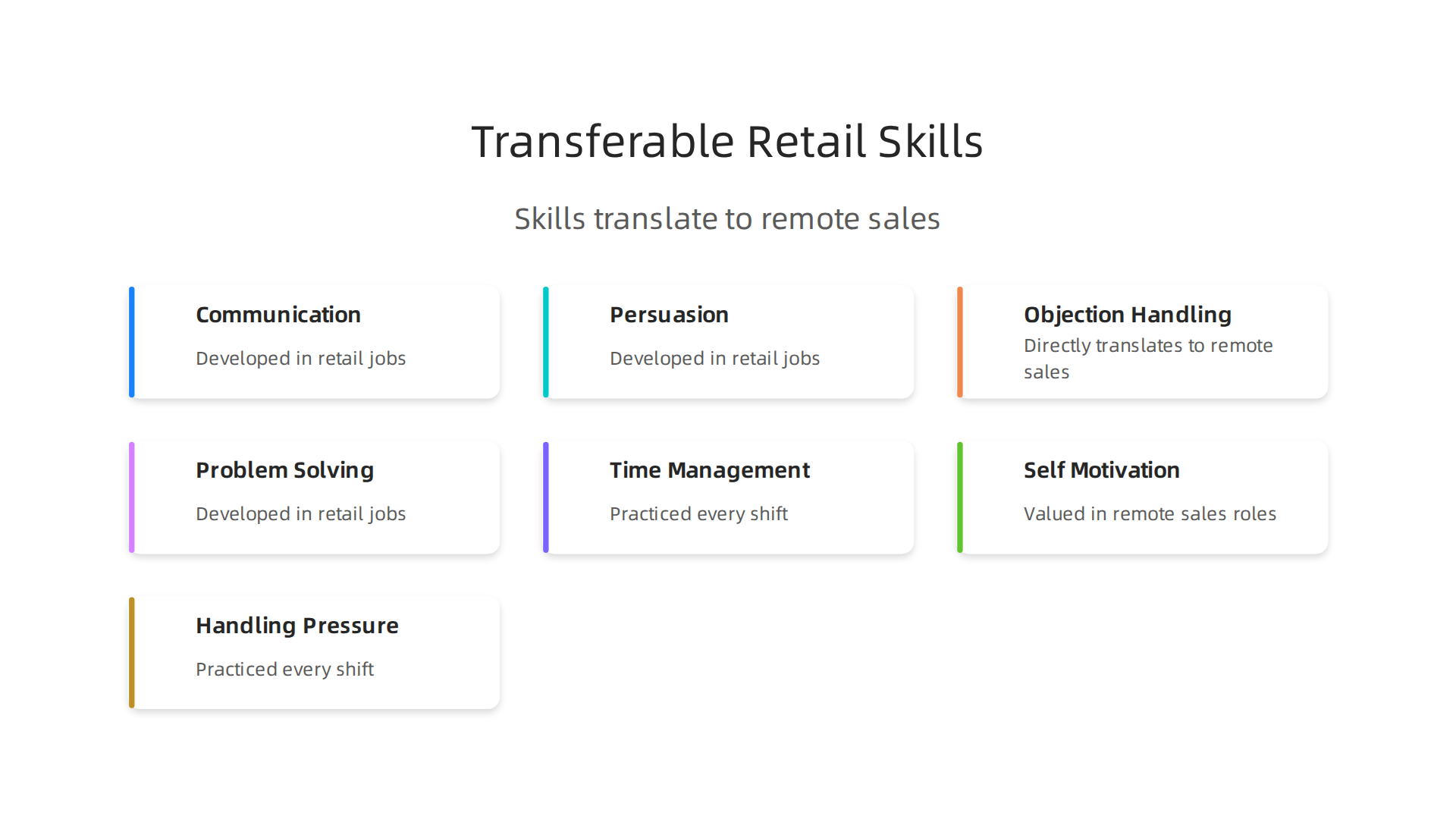
- Communication and Persuasion: You learn to explain things clearly and listen actively. This is the foundation of all sales, especially when you are selling over video calls or email. As experts note, strong communication across all channels is a top transferable skill for 2026.
- Objection Handling: A customer says a product is too expensive. You have to think on your feet, understand their concern, and offer a solution or different option. This is identical to handling a sales prospect’s doubts.
- Problem Solving: You constantly fix issues, whether it is a missing item, a broken fitting room, or a long line. Remote sales is all about solving a client’s business problems. Your retail experience proves you can think critically under pressure.
These are not soft skills. They are the hard, measurable skills that make money. In fact, a recent guide on trending sales skills for 2026 highlights emotional intelligence and adaptive thinking, which you use daily with customers.
Building the Discipline for Remote Work Success
Remote work is not just working in pajamas. It requires serious self discipline. Your part time retail jobs are secretly training you for this.
- Time Management: You have to show up on time, manage your breaks, and complete tasks before your shift ends. This self discipline is critical when no boss is physically watching you at home.
- Self Motivation: On a slow Tuesday, you still need to fold clothes, restock shelves, or find tasks to do. This initiative is exactly what remote sales managers look for. You have to be driven to make your own calls and hit your numbers.
- Handling Pressure: The holiday rush at a mall is a masterclass in managing stress and multitasking. The ability to stay calm and organized when things get busy is a huge asset in any fast paced sales role.
Stop Thinking "Stopgap," Start Thinking "Strategy"
The old view was that retail was just a job to have while you looked for a "real" career. That view is outdated.
Today, smart hiring managers look for proven, transferable skills. Your experience in retail jobs hiring part time is a story of resilience, people skills, and hustle. You can frame it strategically on your resume.
Instead of "Cashier at Mall Store," think "Sales Associate: Developed customer relationships, handled purchasing objections, and managed point of sale transactions in a fast paced environment."
You are not waiting for a career to start. You are already in the training program. A recent study found over half of retail workers are looking to switch fields. Your advantage is that you can see the skills you are building right now as the bridge to your next opportunity.
Your time in the mall is not a pause. It is practice. And when you are ready to move from the store floor to a home office, you will be more prepared than you think. To explore how other customer service skills can transfer to tech, see our guide on finding remote IT support roles.
Finding Legitimate Mall & Retail Opportunities: A Trustworthy Guide
Now that you see the incredible value in mall jobs hiring, the next step is finding the right one. In 2026, the job search landscape is more digital than ever, and sadly, more crowded with scams. The Federal Trade Commission has made fighting job scams and deceptive opportunities a key priority. This means you need a smart, safe strategy to find legitimate part time retail jobs.
Your goal is not just any job. It’s a high quality role that offers fair pay, real training, and a positive environment. Here is your framework for finding it.
The Most Trustworthy Platforms for Retail Jobs in 2026
Start your search on the right foot by using reputable platforms.

Here is a breakdown of where to look.
| Platform | Best For | Why It’s Trustworthy |
|---|---|---|
| Company Career Sites (e.g., Target.com/Careers) | Target jobs, Walmart jobs, and other major retailers. | The most direct source. Job listings are verified, and you apply directly to the employer, cutting out middlemen. |
| LinkedIn Jobs | Finding roles at mall-based stores and discovering hiring managers. | Profiles add a layer of accountability. You can often see who posted the job and research the team. |
| Indeed | A wide net for all types of retail jobs hiring part time. | Aggregates listings from many sources, including direct employer posts. Use its filters for location, job type, and date posted. |
| ZipRecruiter | Fast applications and alerts for new retail openings. | Similar to Indeed, it’s a major aggregator used by thousands of legitimate businesses for hourly hiring. |
| Your Local Mall Website | Hyper-local opportunities you might miss on big boards. | Many malls have a "Careers" or "Tenant Jobs" page listing which stores are actively hiring. |
Pro Tip: Set up job alerts on two of these platforms. Use keywords like "sales associate," "cashier," and "stocking" along with your mall’s name or zip code. This brings new opportunities straight to your inbox.
Your Red Flag Checklist: Spot a Scam Before You Apply
With cyber-enabled fraud on the rise, protecting yourself is a critical skill. Use this quick checklist to vet any job posting.
Stop and investigate if you see:
- Upfront Fees: You are asked to pay for a "starter kit," training materials, or a background check before you are officially hired. Legitimate employers cover these costs or deduct them from a first paycheck.
- Vague Job Descriptions: The posting is all hype ("Unlimited Earning Potential!") with no details on duties, location, or company name. Real mall jobs hiring will describe the daily work.
- Poor Communication: Contact is only through instant messaging apps (like Telegram or WhatsApp) using poor grammar. Professional recruiters use email, phone, or the platform’s messaging system.
- Too Easy Hiring: You are "hired" after a brief text chat with no interview. Real retail managers want to meet you, even if just via a quick video call.
- Mismatched Websites: The link to apply goes to a website that looks similar to a major brand but has a slightly odd URL (e.g., "target-careers.net" instead of "target.com").
If something feels off, it probably is. Trust your instincts. A great part time retail job should feel professional and straightforward from the very first click.
Turning Your Search Into a Strategic Win
Finding a legitimate role is the first concrete step in your career strategy. Each shift you work builds that valuable sales foundation we talked about. And when you are ready to pivot those skills into a remote office role, you will know exactly how to research and vet those opportunities, too.
For a deeper look at how to transition customer facing skills into a digital career, explore our guide on finding remote IT support roles, which uses a similar strategic approach.
Your journey starts with a safe, smart search. Use the trusted platforms, watch for the red flags, and land a role that is more than just a paycheck. It is your next step forward.
Red Flags and Green Lights: Decoding Job Listings
You know where to look for mall jobs hiring. Now, you need to know what you are looking at. A job listing is like a first handshake. It tells you a lot about the company. In 2026, with cyber-enabled fraud taking a top spot for business threats, learning to read these signs is your best defense.
Here is a simple guide to separate the scams from the real part time retail jobs.
Red Flags: Signs of a Potentially Illegitimate Offer
- Payment Structure: They talk more about "unlimited commissions" or "daily payouts" than an hourly wage. Be very careful if they ask for any money upfront for a "starter kit" or "training fee." As the FTC notes, fighting deceptive business opportunities is a key priority, and real employers don’t make you pay to work.
- Vague Language: The duties are unclear. It might say "flexible sales associate" but not explain if you are on the floor, at a register, or in a stockroom. A real retail jobs hiring part time listing will describe a typical shift.
- Strange Communication: The only contact is a generic email (Gmail, Yahoo) or a request to chat on WhatsApp or Telegram. Professional Target jobs or Walmart jobs recruiters use company email and phone numbers.
- No Interview Process: You get a "You’re hired!" text immediately after applying. Legitimate store managers always want to talk to you, even briefly.
Green Lights: Hallmarks of a Trustworthy Job
- Clear Details: The posting lists specific tasks, required hours, the exact store location, and the hiring manager’s name or title.
- Professional Branding: It uses the company’s official logo and links back to their real career website (like target.com/careers).
- Realistic Pay: It states an hourly wage or a clear "base pay plus commission" structure. Benefits like employee discounts or tuition help are mentioned.
- Growth Mentioned: It talks about training, advancement paths, or skill development. This shows they invest in people.
Your 3-Step Verification Process
Before you apply, do this quick check:
- Search the Company + "Careers". Go directly to the brand’s website. If the job isn’t on their official site, it might not be real.
- Check the Contact Info. Does the email address match the company name? A message from "hr@best-mall-store.com" is more trustworthy than "malljobrecruiter123@email.com".
- Look for Reviews. Search the store name and "employee reviews" on sites like Indeed. Current workers will often mention the real hiring process.
Spotting a great opportunity is a skill that applies everywhere. The same care you use to find a solid mall jobs hiring role will help you later if you look for a remote IT support position. If you are interested in building a career outside the mall, resources like Sales Jobs Remote can guide you toward legitimate remote sales roles that value the skills you are building right now.
The Remote Sales Skill Blueprint: What to Learn While on the Mall Floor
You are already building a strong foundation. Every shift you work in a mall jobs hiring role teaches you core sales skills: talking to customers, handling objections, and closing a transaction. These are the human skills that matter in any sales role, now and in the future. As 2026 sales reports show, the most successful sellers blend these classic skills with new digital tools.
But to move from the mall floor to a home office, you need to bridge a specific skills gap. Think of it this way: your part time retail jobs give you the engine. Now you need the navigation system for the digital world.
Here is a clear map of what to learn.
The Skills Gap: From In-Person to Remote
The skills that predict success in sales have shifted meaningfully from just a few years ago. In 2026, companies are looking for a specific blend of tech-savvy and emotional intelligence.
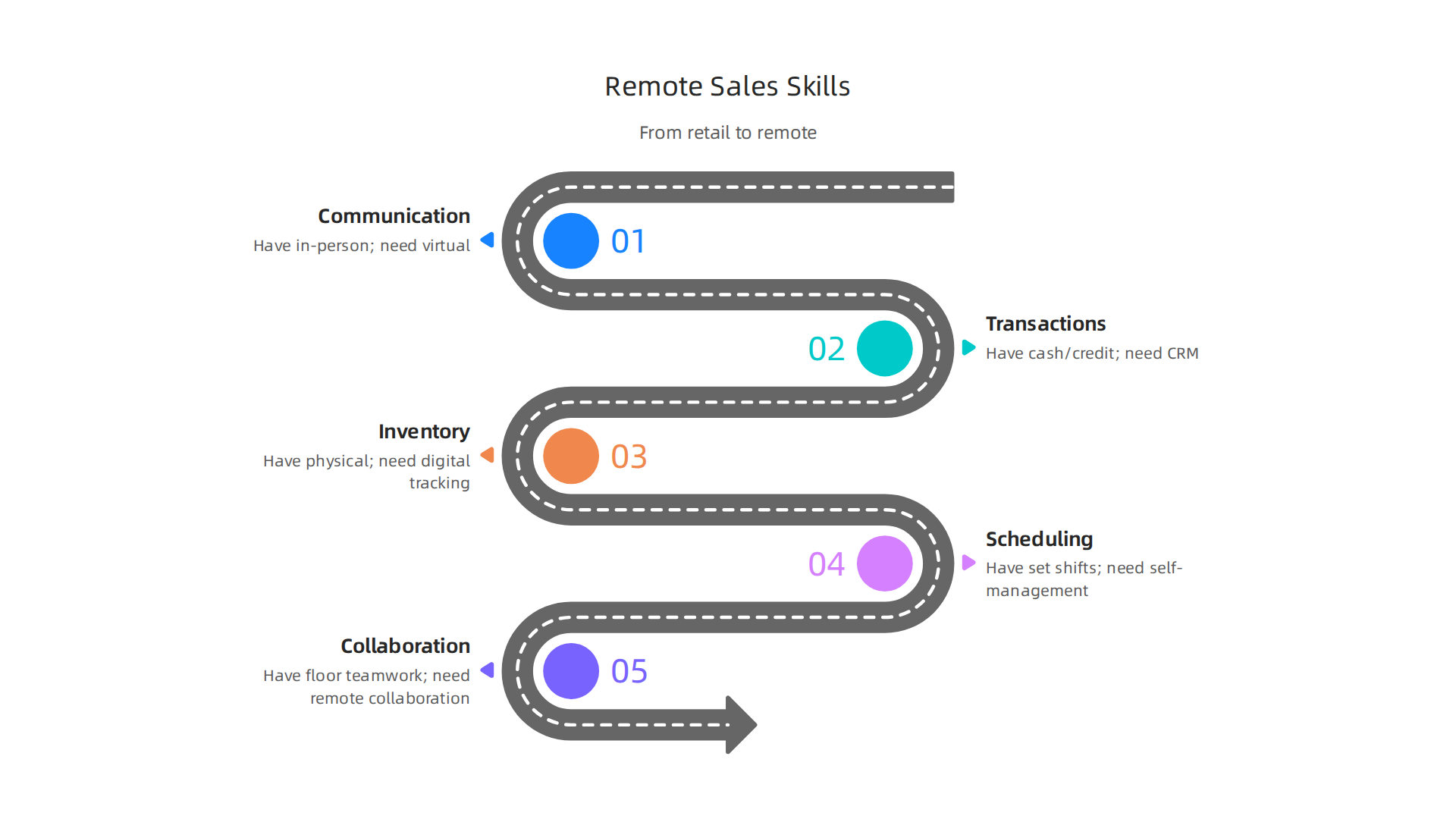
| What You Already Have (From Retail) | What You Need to Add (For Remote Sales) |
|---|---|
| In-person communication & listening | Virtual communication mastery (video calls, clear emails, engaging chat) |
| Handling cash/credit transactions | Understanding digital sales pipelines & CRMs (like Salesforce or HubSpot) |
| Managing a physical inventory | Managing a digital lead database |
| Working a set store schedule | Self-management & discipline in a home office |
| Teamwork on a sales floor | Collaborating with remote teams using apps like Slack |
The good news? The soft skills on the left are often harder to teach. The technical skills on the right are very learnable. As hiring experts note, a skills-first approach is how businesses find top talent in 2026.
Your 2026 Learning Plan: Build Skills Between Shifts
You can learn these new competencies while keeping your current retail jobs hiring part time. This plan focuses on free and low-cost, high-quality resources.
1. Master a CRM (The Digital Sales Floor)
A Customer Relationship Management system is the most important tool for a remote salesperson. It tracks every interaction with a potential customer.
- What to do: Choose one major platform to learn. Salesforce has a huge market share.
- Free resource: Go to Trailhead (Salesforce’s free learning platform). Complete the "Salesforce CRM" beginner trail. It’s interactive and gamified.
2. Excel at Virtual Communication
Selling without body language means your words, voice, and video presence must work harder.
- What to do: Practice. Record yourself answering common interview questions on your phone. Watch it back.
- Free resource: Study resources from top recruitment firms. For example, Randstad’s guide on top sales skills for 2026 highlights the critical need for digital fluency and empathy in virtual settings.
3. Understand Digital Lead Management
In remote sales, leads come from websites, ads, and forms, not walk-ins. You need to know how to prioritize and follow up.
- What to do: Learn basic sales funnel concepts: Awareness, Interest, Decision, Action.
- Free resource: Many sales blogs and YouTube channels explain this. Focus on content from the last two years to ensure it reflects current remote sales role trends.
How to Structure Your Week
- Monday & Tuesday (1 hour after work): Work on a CRM module on Trailhead.
- Wednesday: Practice a virtual sales pitch. Write a follow-up email for a mock product.
- Thursday: Read one article about remote sales hiring trends to understand what industries are hot.
- Weekend: Review and apply. Can you describe what a CRM does? Explain a sales funnel?
This proactive learning transforms your experience. When you apply for remote roles, you won’t just say "I worked Target jobs." You’ll say, "I honed my interpersonal skills in a fast-paced retail environment and independently mastered Salesforce CRM to manage digital sales pipelines effectively."
Building this blueprint opens doors. The same methodical skill-building applies if you later explore fields like remote IT support or other digital careers. The goal is to become a hybrid professional: someone with the people skills from the mall and the tech skills for the modern world.
From Application to Offer: Mastering the Remote Sales Interview
You have the skills blueprint. You are building your tech knowledge. Now comes the moment of truth, the part that makes many people nervous, the interview. But here is the thing. Your time on the mall floor in those part time retail jobs has given you the raw material. Now you just need to learn how to present it for a remote sales role.
Think of it this way. You are not starting from zero. You are translating your experience into a new language. A 2026 study found that more than half of retail workers are thinking about switching careers. You are ahead of the curve because you are learning how to make the switch successfully.
Let us break down the process.
Step 1: Transform Your Resume from Task List to Achievement Hub
Forget listing duties like "operated cash register" or "stocked shelves." For a remote sales role, you need to highlight the sales-relevant outcomes. Recruiters in 2026 use skills-based hiring. They are looking for proof of your abilities.
Take any experience from Walmart jobs or Target jobs and reframe it using numbers and results.
Instead of this:
- Assisted customers on the sales floor.
Write this:
- Consistently exceeded daily sales goals by 15% through proactive customer engagement and product knowledge, directly contributing to store revenue.
Instead of this:
- Handled customer complaints.
Write this:
- Resolved an average of 20+ customer concerns weekly, retaining 95% of dissatisfied customers and protecting future sales, demonstrating problem-solving and relationship management.
This method shows you understand the core of sales, revenue, and customer retention. It highlights the transferable skills from retail that corporate employers value, like communication and problem-solving.
Step 2: Demystify the Remote Interview Process
Remote interviews come in a few formats. Knowing what to expect removes half the anxiety.
- Video Call (Live): This is the most common. It is a face-to-face conversation over Zoom or Google Meet. The key is to treat it like an in-person meeting.
- Asynchronous Video Interview: You might get a link, see questions on screen, and record your answers within a time limit. No live interviewer. Practice concise, structured answers beforehand.
- Phone Screen: Often the first step. Focus on clear, enthusiastic communication since they cannot see your face.
Regardless of format, your environment is part of your presentation. Find a quiet, well-lit spot with a neutral background. Test your camera and microphone early. Your setup shows your professionalism and preparedness for remote work.
Step 3: Confidently Articulate Your Retail Experience
This is where you shine. Remote sales hiring managers want to know you can handle pressure, communicate clearly, and work independently. Your retail jobs hiring part time are a goldmine of examples.
Prepare stories using the STAR method (Situation, Task, Action, Result) for common behavioral questions.
Question: "Tell me about a time you dealt with a difficult customer."
Your Retail-Powered Answer:
- Situation: "During a busy holiday shift at my mall store, a customer was upset because a popular gift item was sold out."
- Task: "My task was to resolve their frustration and find a solution that kept them as a customer."
- Action: "I listened calmly to understand their need, apologized for the inconvenience, and immediately checked our inventory system for a similar item. I found a comparable product at a nearby sister store, called to hold it, and provided the customer with detailed directions."
- Result: "The customer was grateful for the proactive help. They purchased the alternative item and later left a positive review mentioning my service, which reinforced the importance of solution-oriented thinking."
This story proves you have composure, problem-solving skills, and a customer-centric approach, all critical for sales. For more practice with these types of questions, resources like Indeed’s guide to sales behavioral interview questions are incredibly useful.
The goal is to connect the dots for the interviewer. When they hear about your mall jobs hiring background, you want them to think, "This person understands customer dynamics, handles rejection, and closes transactions. They can learn our CRM."
Master this interview process, and you do not just get a job offer. You validate that your hands-on experience is powerful and directly applicable to the digital sales world of 2026. The same confident storytelling will serve you well if you explore other digital paths, like transitioning into remote HR jobs or specialized support roles.
Building Your Remote Sales Network from Anywhere
You have your resume ready and your interview stories polished. What is the next piece of the puzzle? It is building a network that opens doors. If the word "networking" makes you think of awkward mixers and forced small talk, take a deep breath. In 2026, building a professional network for remote sales looks different. It is quieter, more digital, and you can start from anywhere, even while you are still working your mall jobs hiring shifts.
Here is how to build meaningful connections on your own terms.
Start With Low-Pressure, Digital-First Strategies
Networking does not have to mean asking strangers for a job. For introverts and career switchers, the best approach is to start as a learner. Your goal is to listen, learn, and contribute value when you can.
- Follow and Listen: Identify sales leaders, remote companies, and professionals you admire on platforms like LinkedIn. Follow them. Read their posts and the conversations in the comments. This is passive learning that builds your industry knowledge without any pressure.
- Engage Thoughtfully: When you feel ready, add a thoughtful comment on a post that resonates with you. Maybe you agree with a point and can share a tiny, relevant story from your own part time retail jobs experience. This shows you are engaged and thinking critically.
- Virtual Events are Your Friend: Many webinars, live Q&As, and virtual conferences are free. You can attend with your camera off, absorb the information, and use the chat function to ask a smart question. It is a zero-pressure way to be present.
This approach lets you build visibility and credibility slowly. You are not asking for anything. You are just becoming a known, positive presence in the digital sales space.
Leverage Your Current Retail Job as a Networking Tool
Your current job is not just a line on your resume. It is a live environment full of potential connections. Think about the people you interact with every day.
- Connect with Vendors and Brand Reps: Do vendors from brands like Nike or Sony visit your store? Do you interact with brand representatives? These people work in sales and marketing. A simple, professional conversation about their products can be a bridge. Later, you can connect with them on LinkedIn with a note like, "Enjoyed learning about the new product line at the store. I’m exploring sales careers myself."
- Talk to Your Managers: Your store manager or department lead has experience with metrics, customer service, and team management. Express your interest in developing a sales career. Ask for their advice on professionalism or communication. They might know someone, or they might become a valuable reference who can speak to your transferable skills.
This method turns your daily retail jobs hiring part time into active networking opportunities. The connections are authentic because they are based on real interactions.
Join Specific Online Sales Communities
This is where the magic happens for remote workers. Digital communities are where advice is shared, jobs are posted, and mentors can be found. You do not need to be in a big city. You just need an internet connection.
In 2026, sales communities are more active and specialized than ever. A recent guide highlighted several key communities that are perfect for aspiring and new sales professionals looking to learn and connect. These include groups focused on revenue operations, women in tech sales, and broader professional networks.
Here are some specific types of communities to explore:
- Large Professional Networks: Look for groups like "Sales Hacker" or "RevGenius" on platforms like Slack or LinkedIn. These are vast communities where you can find channels for every sales topic imaginable, from cold emailing to CRM tips.
- Niche and Support Groups: Seek out communities tailored to your identity or interests, such as "Women in Tech Sales" or "National Sales Network." These can provide more targeted support and mentorship.
- Platform-Specific Hubs: Don’t forget about Reddit. Subreddits like r/sales are treasure troves of honest advice, interview debriefs, and job leads from real salespeople.
- Local(ish) Digital Groups: Search for "remote sales" or "tech sales" groups based in your country or time zone on Facebook or LinkedIn. This can make virtual coffee chats more logistically friendly.
The key is to join two or three that feel right. Introduce yourself in the introduction channel. Mention you are transitioning from Walmart jobs or Target jobs into remote sales and are eager to learn. You will be surprised how many people are willing to help.
Building this network gives you a support system, a source for job referrals, and real-time industry knowledge. It transforms your journey from a solo mission into a team effort. As you grow your sales skills, remember that many of the same networking principles apply to other digital fields, like landing remote IT support jobs.
Start small. Make one new connection this week. Your future remote sales career will thank you for it.
Your Career Path: From Retail Associate to Remote Sales Leader
So you are building your network and learning the ropes. What comes next? It is time to see the full map of where you are going. Your journey from a part time retail jobs counter to a remote sales leader is not a mystery. It is a clear, multi stage path that thousands have walked.
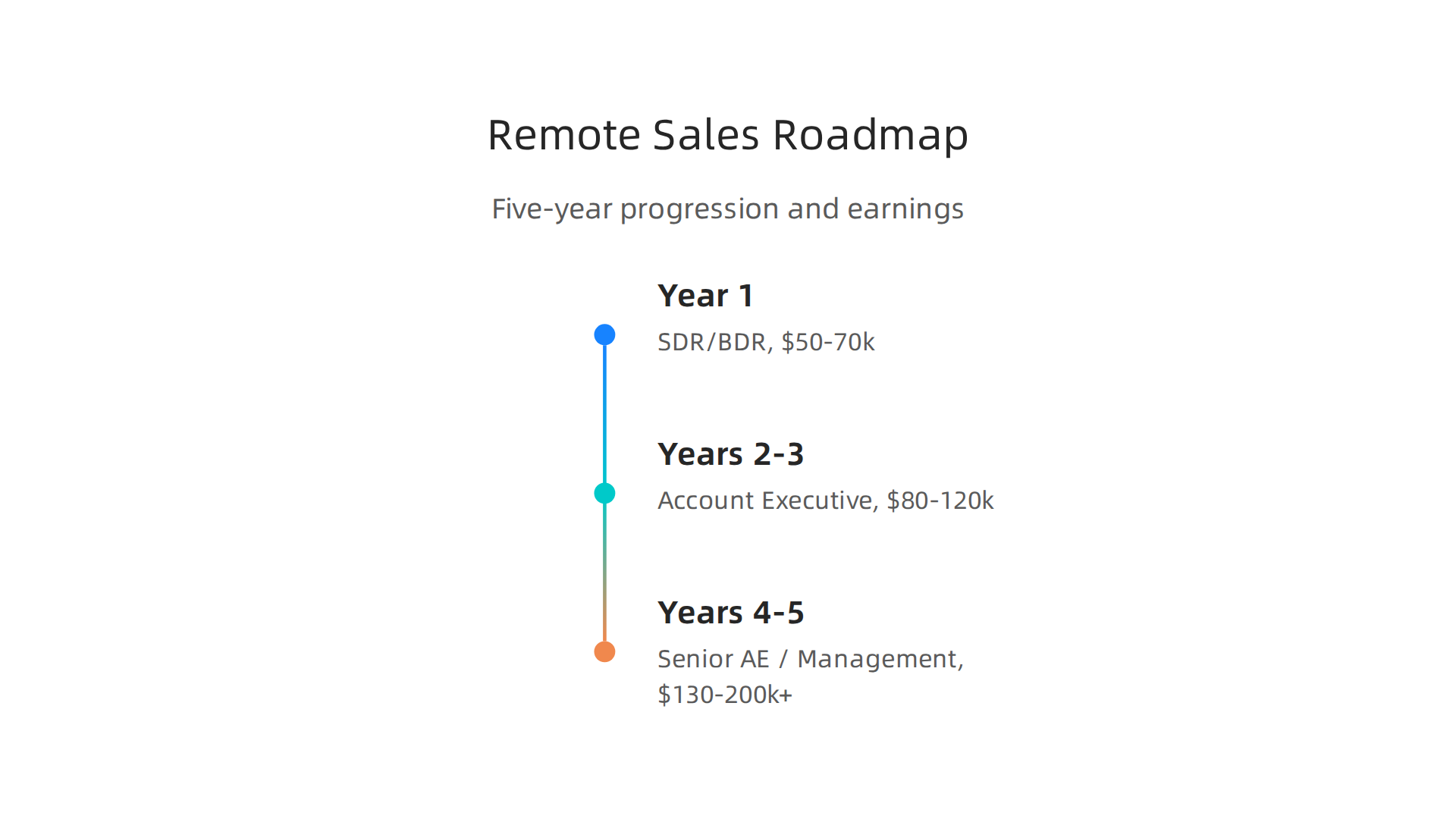
Let us break down the realistic stages, timelines, and earning potential you can expect.
The Realistic Progression: A 5-Year Roadmap
Think of your career in phases. Each one builds on the last, turning your retail hustle into professional expertise.
- Year 1: The Foundation (Entry-Level Remote SDR/BDR). This is your first remote sales role. Titles are often Sales Development Representative (SDR) or Business Development Representative (BDR). Your job is to find leads, make calls, and set appointments. Your experience with customers in mall jobs hiring or at Target jobs is your secret weapon here. You already know how to start conversations. Expect to spend 1-2 years mastering outreach, using a CRM, and learning the sales process.
- Years 2-3: The Closer (Account Executive). After proving you can generate interest, you move to closing deals. As an Account Executive (AE), you take the qualified leads and guide them to a purchase. This is where income jumps significantly with commission. You will deepen your product knowledge and negotiation skills. This phase typically lasts 2-4 years.
- Years 4-5: The Leader (Senior AE & Management). Here, you specialize or lead. You might become a Senior AE handling bigger accounts, or move into sales management, coaching new SDRs who are just starting from their own retail jobs hiring part time. Leadership is about strategy, mentoring, and driving team results.
What Can You Earn? Understanding the Income Trajectory
Your income grows with each step, shifting from hourly wages to salary plus commission. This is the powerful financial shift in a sales career.
- Starting Point (Retail): Hourly wages, often with limited upside.
- Remote SDR/BDR (Year 1): A base salary plus bonus for setting meetings. In 2026, total compensation often ranges from $50,000 to $70,000 for this entry-level remote role. Your consistent work ethic from Walmart jobs translates directly to hitting activity metrics.
- Account Executive (Years 2-3): Earnings are heavily tied to performance. A realistic on-target earnings (OTE) range is $80,000 to $120,000, with top performers earning much more. This is where the commission model rewards your skill.
- Senior Roles & Management (Years 4-5+): Compensation includes higher base salaries, larger commissions, and often equity or leadership bonuses. It is common for earnings to reach $130,000 to $200,000 and beyond. Industry reports, like those analyzing occupational wage data, show that sales roles in high-demand tech sectors offer strong median wages with significant growth potential for top performers.
Growing for the Long Term: Mentorship and Specialization
The learning does not stop when you become a closer. Long term success is about continuous growth and finding your niche.
- Find a Mentor: A good mentor, perhaps someone you met in an online sales community, can shortcut your learning. They provide advice on handling complex deals, career moves, and office politics (even in a remote office).
- Pursue Strategic Certifications: After mastering the basics, consider certifications. These are not required to start, but they build credibility for advancement. Examples include advanced CRM administration, sales methodology training (like MEDDIC or Command of the Message), or industry specific knowledge in areas like cybersecurity or SaaS.
- Specialize: The most successful salespeople often specialize. In 2026, high growth areas include selling AI platforms, cybersecurity solutions, and fintech products. Specializing makes you a sought after expert. You can explore how specialization works in adjacent fields, like landing remote HR jobs or remote IT support jobs.
This path is a marathon, not a sprint. Each skill you build in retail, each connection you make, and each goal you hit on this roadmap brings you closer to leading a sales team from your home office. The journey from the mall floor to remote sales leadership is not just possible. It is a well defined career path waiting for you to start walking it.
Summary
This article reframes mall and part-time retail work as a practical training ground for remote sales careers, explaining how everyday tasks like helping customers, handling complaints, and meeting quotas build high-value, transferable skills. It walks you through where to find legitimate retail openings, how to spot scams, and how to reframe retail experience into measurable sales achievements on your resume. You’ll get a clear learning plan—mastering a CRM, improving virtual communication, and practicing lead management—that you can follow between shifts. The guide also covers remote interview formats, storytelling techniques to showcase retail experience, and low-pressure networking strategies to open doors. Finally, it maps a realistic five-year career progression from entry-level remote SDR/BDR roles to senior sales or management, including typical compensation ranges and next-step certifications.