Remote Nursing Jobs 2026: Find Your Flexible Career Path

Have you thought about helping people from the comfort of your home? Many nurses are now finding work this way, and these remote nursing jobs are becoming more common in 2026. In fact, experts believed there would be a need for nurses more than almost any other job through this year [1]. This is great news if you are a registered nurse (RN) looking for a change!
Remote nursing means you can do your job without going into a hospital or clinic every day. Some popular remote nursing roles include:
- Telehealth: Giving health advice over the phone or video calls.
- Case Management: Helping patients manage their health plans and care from a distance.
- Triage: Deciding how urgent a patient’s health problem is over the phone.
- Remote Patient Monitoring: Checking on patients’ health data from their homes, like blood pressure or heart rate, without being there in person.
It’s a big shift, offering more flexibility, maybe even options for part time RN jobs. Many people are looking for ways to work from home these days. Beyond nursing, there are lots of different remote jobs out there, including many high-paying part-time remote jobs to earn more from home.
But here’s the thing. While remote nursing jobs are great, finding the right one can be tricky. You might face some challenges like:
- Finding real job listings: It can be hard to tell which job postings are truly legitimate.
- Understanding state rules: Nurses need to know about different state licensing rules when working from home, especially if patients are in other states [2].
- Learning new skills: Remote work needs special skills, like being good with computers and talking clearly without being face-to-face.
This guide is here to help you. We will walk you through all you need to know about remote nursing jobs. You’ll learn where to find good job openings and how to check if they are real. We’ll also tell you about the skills and paperwork you might need. Plus, we’ll give you tips for interviews and show you how to grow your career in remote nursing. Our goal is to make your path to a fulfilling remote nursing role clear and easy to follow.
Working from home as a nurse is a growing trend in 2026. But what exactly counts as a remote nursing job? It’s more than just talking on the phone; it covers many important roles that help people with their health from a distance. Let’s look at the different types of remote nursing jobs, where you might find them, and how they help patients.
Types of Remote Nursing Roles
Remote nursing roles are diverse, meaning there are many different jobs you can do. Here are some of the main ones:
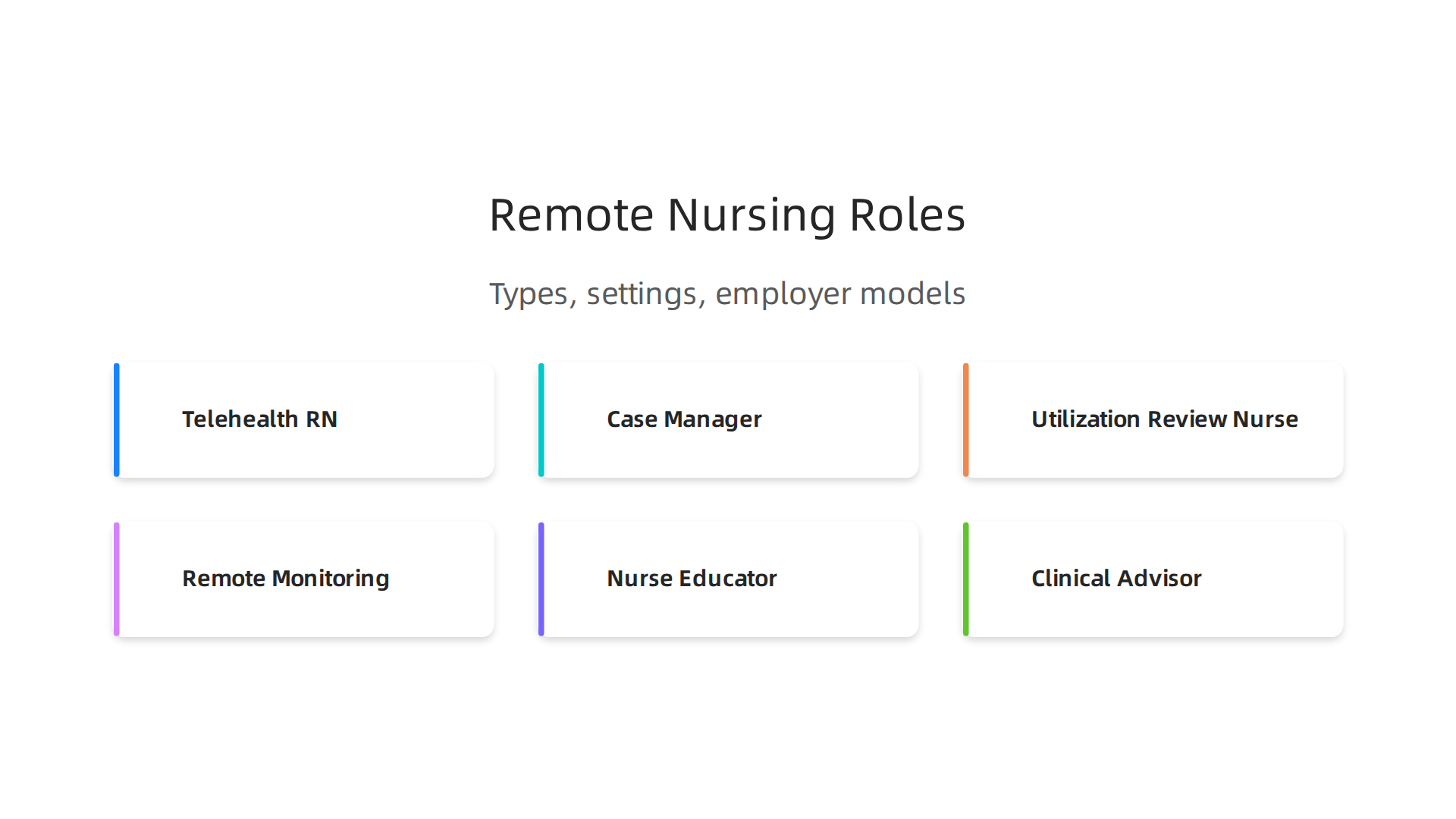
- Telehealth RN: As mentioned before, these nurses use video calls or phone calls to help patients. They answer questions, give medical advice, and sometimes even help decide if a patient needs to see a doctor in person [1]. The rules for telehealth services have changed a lot, with many now being permanent or extended through 2027 [2, 3].
- Case Manager: A remote case manager helps patients with long-term health problems or complicated care plans. They work with patients and their families to make sure they get the right medical care and support. This often involves careful planning and communication to link patients with needed services.
- Utilization Review Nurse: This kind of nurse checks if medical treatments, tests, or hospital stays are truly necessary. They look at patient records from afar to make sure care is proper and follows health rules.
- Remote Patient Monitoring Nurse: These nurses keep an eye on patients’ health data, like blood pressure or blood sugar levels, which are sent from the patient’s home devices. This helps them notice changes quickly and step in if something seems wrong.
- Nurse Educator: A remote nurse educator teaches others. This could mean training new nurses, helping patients understand their health conditions, or creating helpful online learning materials.
- Clinical Advisor: These nurses give expert advice to companies. They might work for healthcare tech companies, insurance providers, or businesses that make medical products, using their nursing knowledge to guide decisions.
Many of these roles can be part time RN jobs, offering great flexibility.
Who Hires Remote Nurses? Typical Employer Models
You might wonder where to find these remote nursing jobs. Many different kinds of places hire remote nurses:
- Health Systems and Hospitals: Even traditional hospitals are building remote teams for telehealth services and patient monitoring.
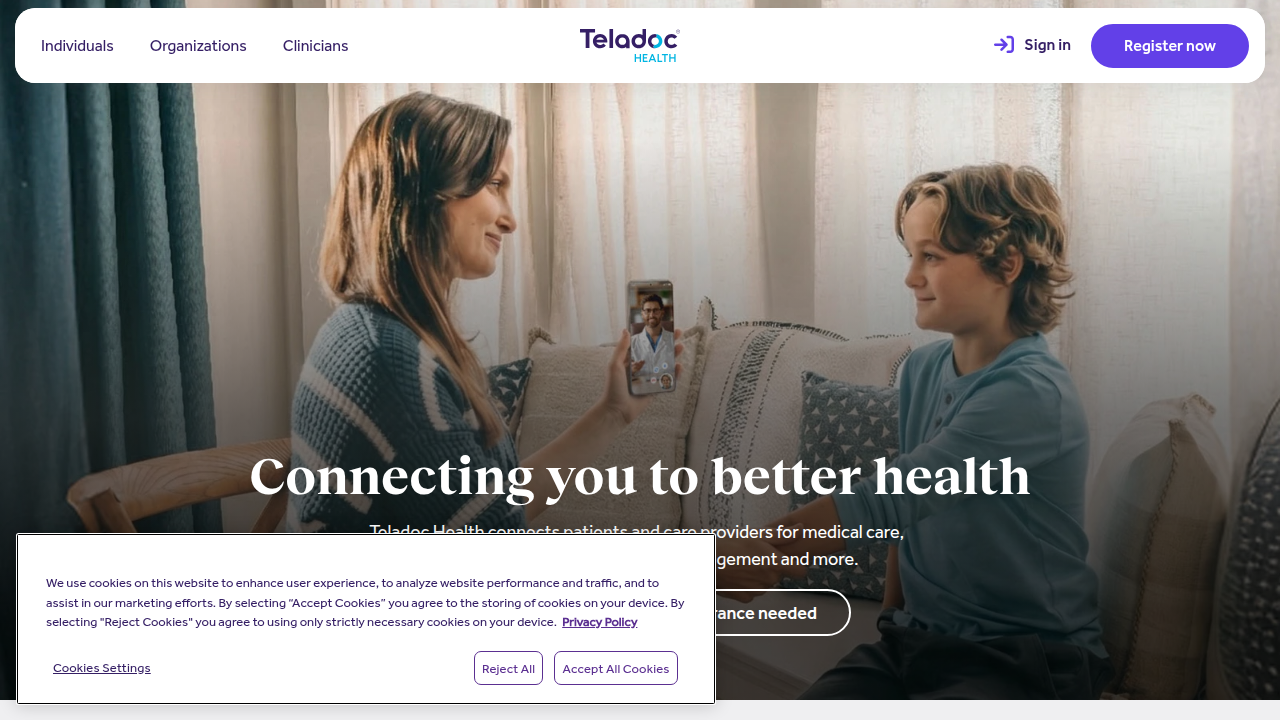
- Telehealth Providers: These are companies that focus entirely on offering medical care through technology. They hire many remote nurses to deliver virtual care [4].
- Insurance Companies: Health insurers need nurses for roles like case management and utilization review to help their members and manage benefits.
- Vendor Platforms and Startups: New companies creating healthcare technology or services often hire nurses to help develop and manage their offerings.
- Employer-Based Programs: Some large businesses hire nurses to run health programs or give advice to their own employees.
Where Remote Nurses Fit in Patient Care
Remote nurses play a role in all parts of patient care. They help with:
- Acute Care: For sudden health problems. A remote nurse might be the first person a patient talks to, helping decide if they need urgent care or if their issue can be handled remotely.
- Chronic Care Management: For long-term health conditions. Remote nurses help patients manage conditions like diabetes or heart disease over time, helping them stay healthy at home.
- Preventive Care: This is all about helping people avoid getting sick in the first place. Remote nurses might give advice on healthy living, diet, or important health screenings.
No matter the setting, remote nursing jobs are about helping people get the care they need, often making healthcare more accessible and convenient. If you’re looking for more flexible work, you might be interested in exploring other options, too. You can find out more about what’s out there by checking out these 9 High-Paying Part-Time Remote Jobs to Earn More From Home.
If you are a nurse thinking about moving to remote nursing jobs, you’re in luck! Many of the skills you already use every day are perfect for working from home. Let’s look at what helps nurses make this exciting change, from the skills you have to any extra training that can boost your chances in 2026.
Important Skills You Already Have
Nurses have many skills that work well for remote roles. These are often called "transferable skills" because you can use them in new situations.
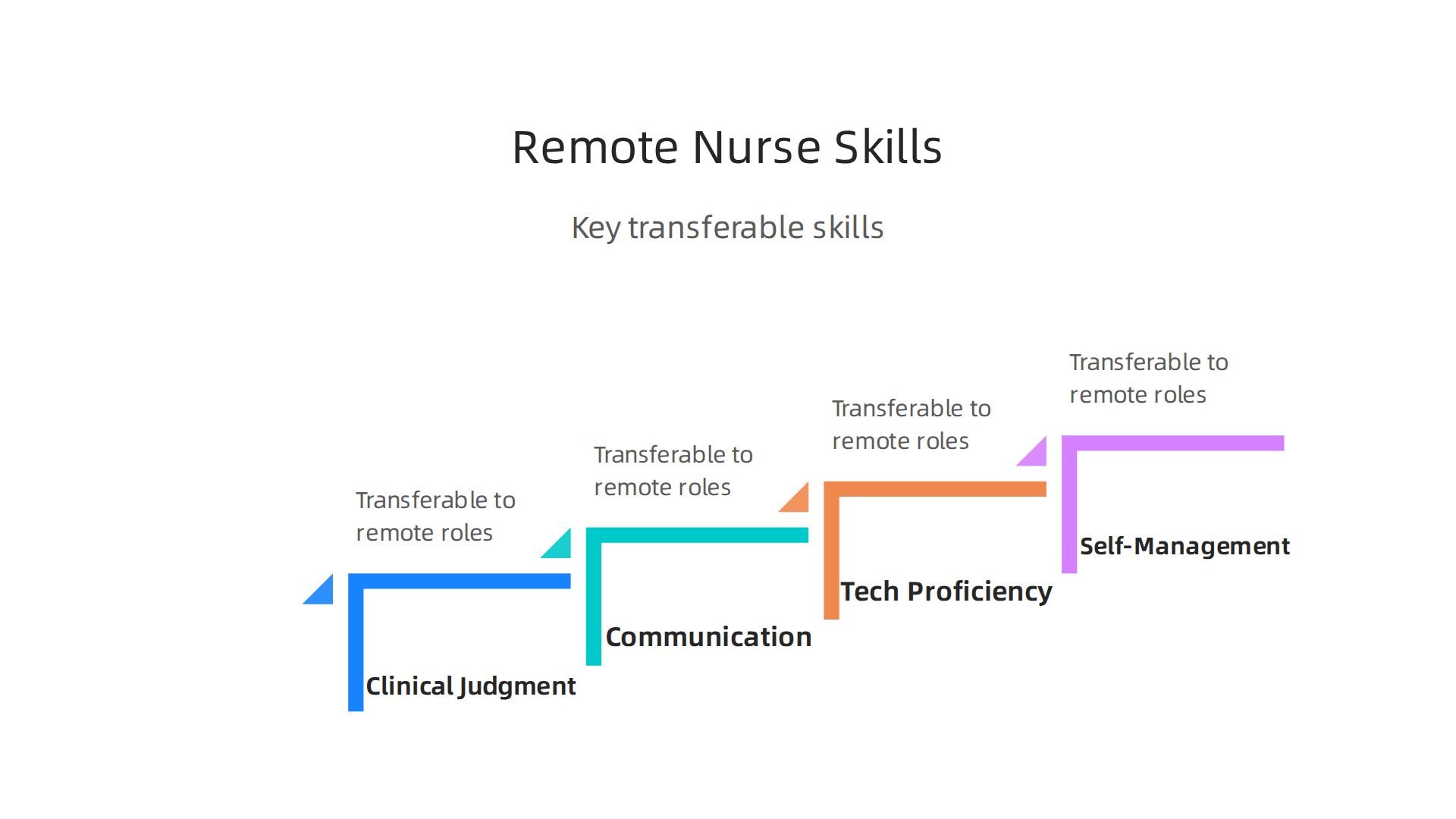
- Clinical Skills: You might think clinical skills are only for working in person, but they are very important for remote nursing too. Things like figuring out what’s wrong with a patient (assessment), helping them understand their health (patient education), and guiding them through long-term illnesses (chronic care management) are key [7]. For example, telehealth nurses need to be good at triage, which means deciding how urgent a patient’s problem is over the phone or video [7].
- Communication Skills: Being able to talk clearly and listen well is super important. Remote nurses use strong written and spoken communication to explain things to patients, families, and other healthcare workers. This also includes knowing how to be kind and understanding, or having empathy, even when you’re not in the same room [1].
- Tech Skills: In 2026, knowing how to use computers and different programs is a must. This includes electronic health records (EHRs), video call tools like Zoom, and chat programs. Being comfortable with technology helps you do your job well and quickly [1, 3].
- Self-Management: Working from home means you need to be good at managing your own time and staying focused without someone always watching over you. Being organized and able to adjust to new situations (adaptability) are also big pluses for these roles [4].
Certifications and Training That Help
To get remote nursing jobs, there are a few things that can make you stand out:
- Active RN License: This is the most important thing. You need to have a current Registered Nurse (RN) license, or sometimes an LPN/LVN license, in the state where you’ll be working and where your patients are located [2].
- Telehealth Competencies: Some places offer special training or certifications for telehealth. This shows you understand how to provide care safely and effectively through technology.
- Specialty Experience: If you have worked in areas like emergency care, intensive care, or case management, that experience is very valuable for many remote nursing roles like telehealth triage or utilization review [5, 7].
- Digital Literacy: As healthcare uses more new tools like artificial intelligence (AI), knowing how to use digital tools makes you a strong candidate [3].
Starting Your Remote Nursing Journey
Are you new to remote nursing or looking to switch careers? Here’s how to get started:
- Look for Entry-Level Remote Roles: Some remote nursing jobs, like certain case management or utilization review positions, can be good starting points because they build directly on your core clinical judgment and patient assessment skills [5, 7].
- Highlight Your Skills: When you apply for a job, make sure your resume shows how your clinical, communication, and tech skills match what remote roles need. Even if you don’t have direct remote work experience, you can show how your past work prepares you.
- Consider Part-Time Options: Sometimes, starting with part time RN jobs can help you get your foot in the door and gain remote experience while still working in your current role or doing other things.
- Look for Resources: Many websites specialize in remote nursing job listings and offer tips for getting hired. Looking at places like the Nurse Fern remote nursing job board or other dedicated sites can be a big help [11, 13].
Changing to remote nursing is possible with the right skills and a smart approach. If you’re looking for more tips on finding at-home jobs, especially if you’re exploring roles with little to no prior remote experience, you can learn more about how to find at home jobs no experience in 2026.
Finding legitimate remote nursing jobs can feel like a big hunt. With so many options out there in 2026, it’s super important to know where to look and how to avoid fake job offers. Let’s explore the best places to search and what to watch out for.
Where to Find Legitimate Remote Nursing Jobs
You have several good places to start your search for remote nursing jobs:
- Specialized Remote Nursing Job Boards: These websites focus only on remote healthcare roles, which makes your search much easier.
- Nurse Fern offers a job board with remote nurse job titles and company names, a great place to begin [6].
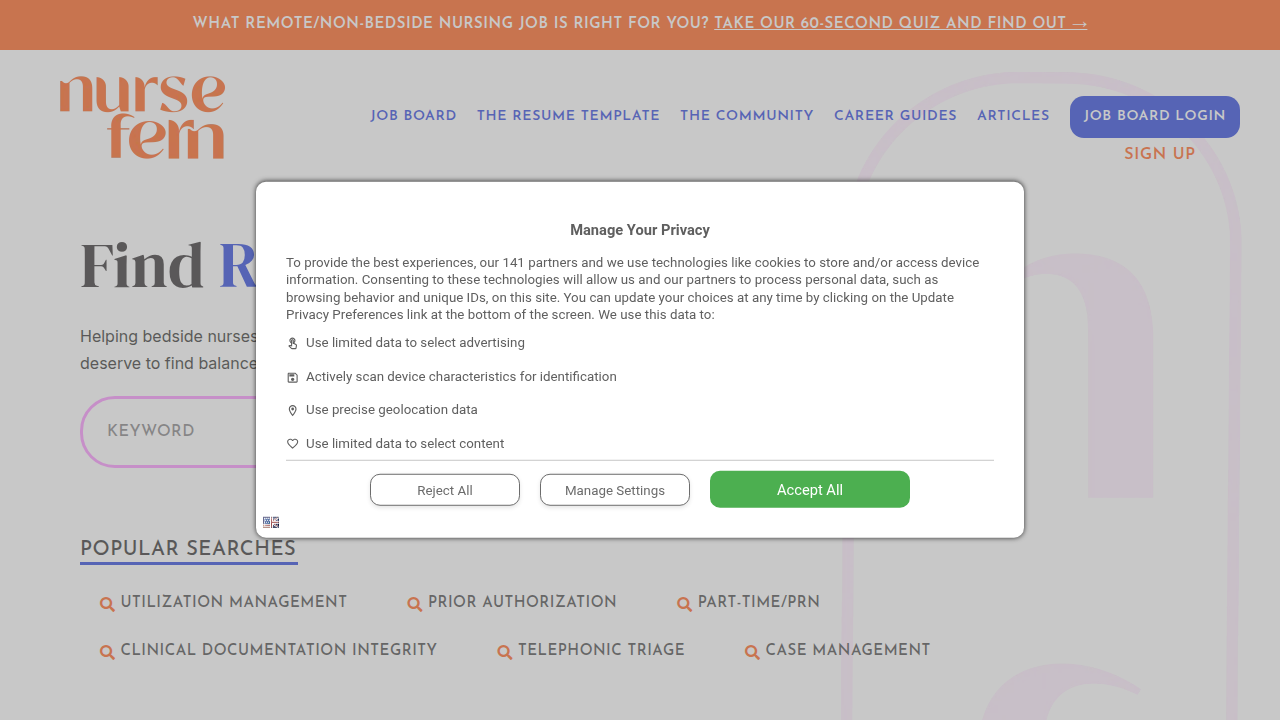
*   **Remote Nurse Connection** also provides a job board with hand-picked jobs from vetted employers [4].
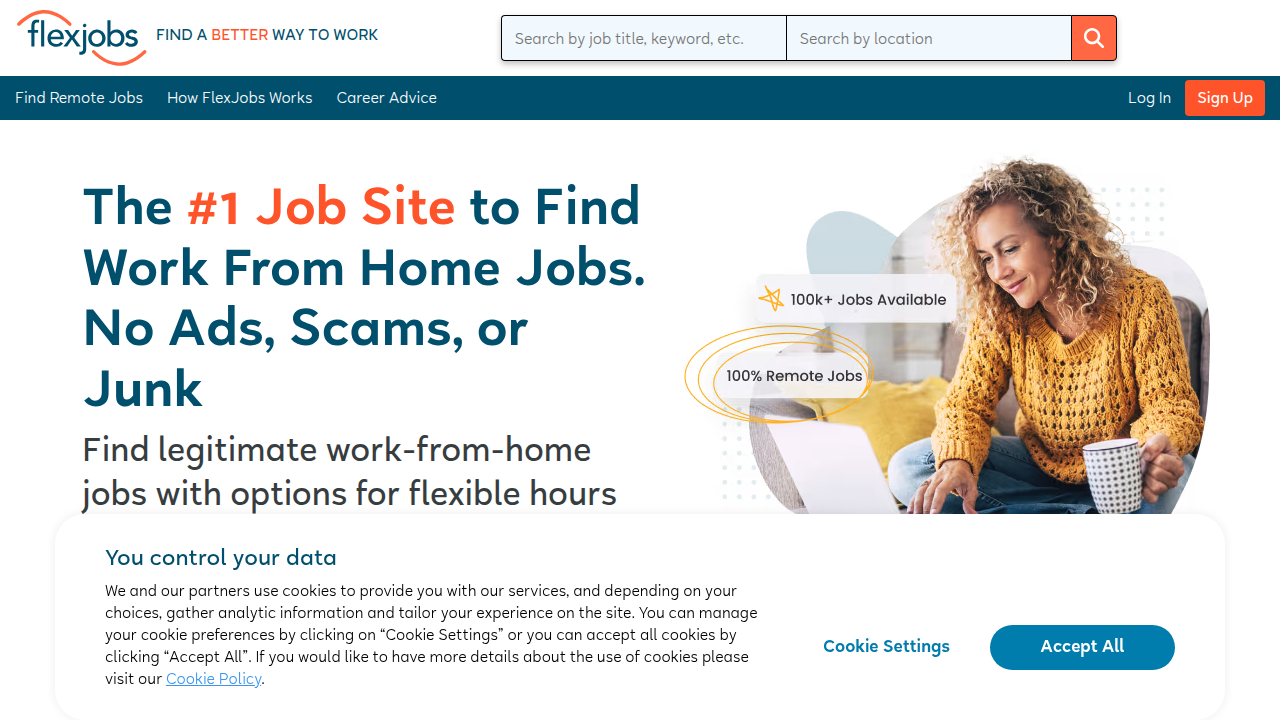
*   **FlexJobs** is another top choice because every job listing is checked by hand before it goes live, helping you avoid scams [3].
- General Job Boards with Filters: Big job sites like Indeed, LinkedIn, and Glassdoor [7] list many jobs. You just need to use their search filters wisely. Type in "remote nurse," "work from home RN," or "telehealth nurse." You can also look for
part time rn jobsif you want flexible options. - Company Career Pages: Many companies that hire remote nurses post jobs directly on their own websites.
- Telehealth Companies: Businesses focused on virtual care are always looking for nurses.
- Insurance Companies: They hire nurses for roles like case management, utilization review, and care coordination.
- Large Hospital Systems: Even big hospitals now have remote teams for certain administrative or patient support roles.
- Niche Recruiter Networks: Some recruiters specialize in healthcare and remote roles. They can connect you with jobs that aren’t publicly advertised.
How to Spot a Fake Remote Nursing Job
Sadly, there are many job scams out there in 2026, so you need to be careful [1]. Here are some red flags and what to check:
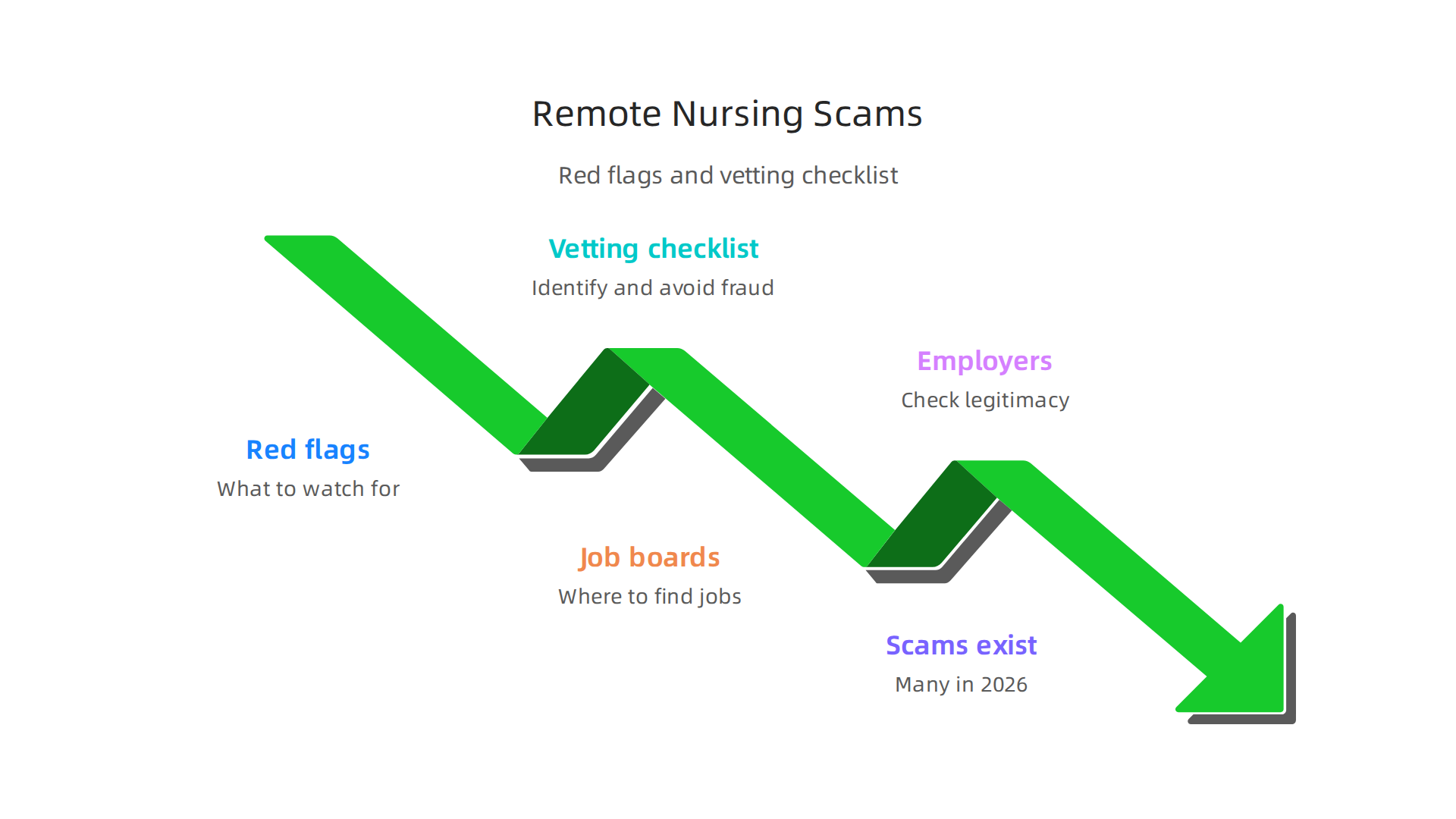
- Red Flags to Watch Out For:
- Pay that’s too good to be true: If a job offers much higher pay than similar roles for little effort, be suspicious.
- Asking for money: Legitimate employers will never ask you to pay for training, equipment, or background checks.
- Vague job details: If the job description is unclear or seems to apply to many different roles, it could be a scam.
- Pressure to act fast: Scammers often try to rush you into accepting an offer without proper interviews or checks.
- No clear company information: If you can’t find much about the company online or their contact info is missing, be wary.
- Your Vetting Checklist:
- Check the company website: Does it look professional? Is there real contact information?
- Look for reviews: Search for the company on sites like Glassdoor or LinkedIn to see what others say about working there.
- Verify the email address: Make sure the email comes from the company’s official domain, not a generic email service like Gmail.
- Understand the interview process: A real job will have a clear interview process, often with multiple steps and different people involved.
Smart Search Tips for Remote Nursing Jobs
To make your job search easier and more effective:
- Use Specific Keywords: Don’t just type "nursing jobs." Add "remote," "telehealth," "virtual," or "work from home."
- Set Up Job Alerts: Most job boards let you create alerts. This way, new
remote nursing jobsthat match your search terms will be sent right to your email. - Save Your Searches: If a job board allows it, save your search settings. This saves time each time you look for jobs.
- Be Open to Different Roles: Remember, remote nursing isn’t just telehealth. It can include case management, utilization review, patient education, and more.
Finding your first remote nursing role is within reach. By using the right tools and staying smart about your search, you can land a great opportunity from home.
If you’re looking for more tips on finding at-home jobs, especially if you’re exploring roles with little to no prior remote experience, you can learn more about how to find at home jobs no experience in 2026.
When you look for remote nursing jobs, it’s good to know what kind of pay and benefits to expect. You also want to see how these jobs can help you grow in your career. Let’s talk about what remote nursing looks like in 2026.
How Remote Nursing Jobs Pay
Remote nursing jobs can pay in different ways. This helps you find a setup that works best for you.
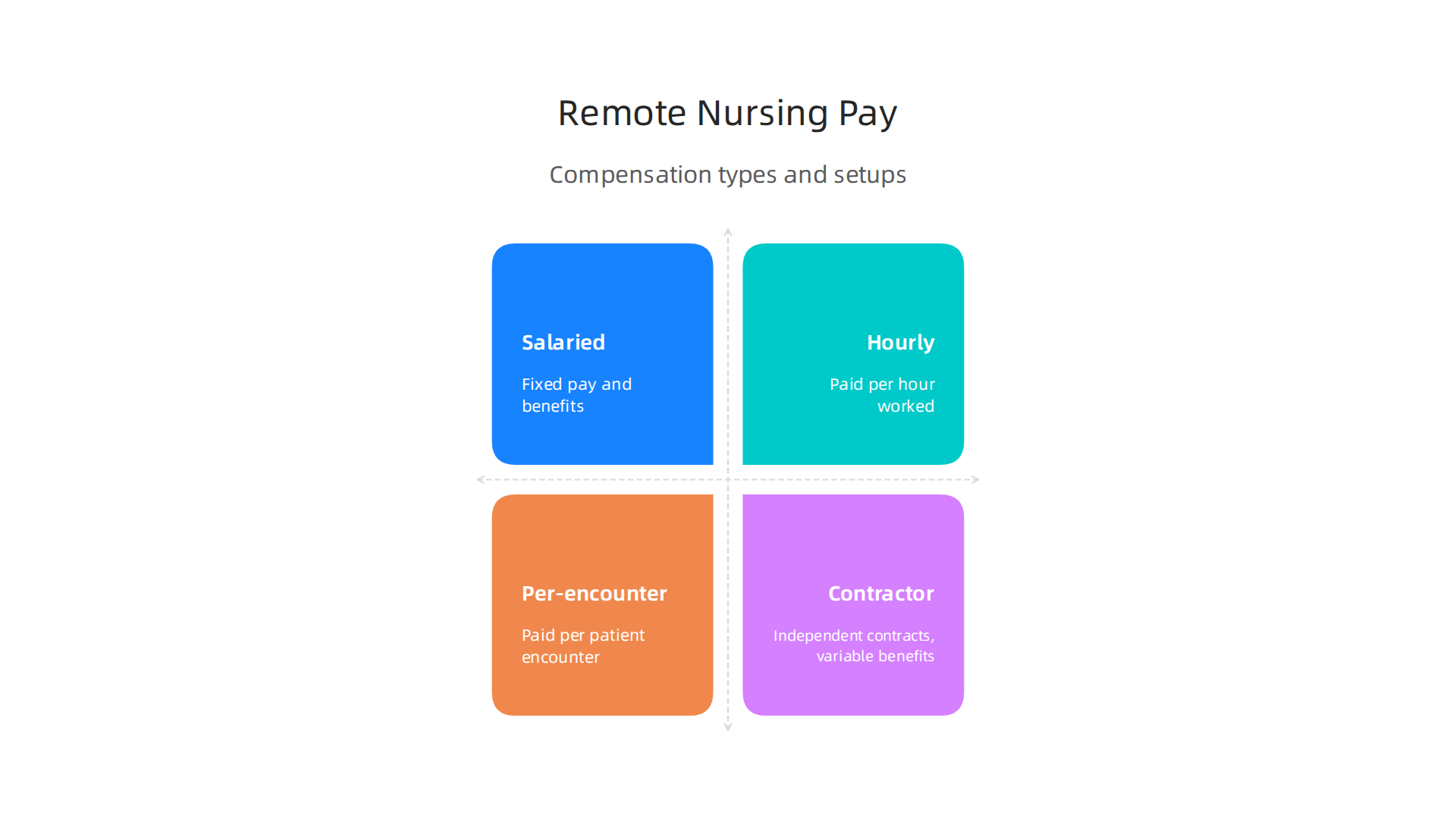
- Salaried Pay: Many full-time remote nursing jobs offer a set yearly salary. In 2026, the average annual pay for a remote nurse in the United States is around $81,941 per year, though this can change based on your experience and where you live [3]. For example, a remote nurse in California might earn about $79,269 a year [2]. Some telehealth nurses might even expect to earn between $70,000 and $90,000 annually [1].
- Hourly Pay: Some remote
part time rn jobspay by the hour. The average hourly rate for a remote RN in the U.S. is about $36.06 as of April 2026, with a range from $29.33 to $42.55 [4]. This can be great if you need flexible hours. - Per-Encounter Pay: For some telehealth roles, you might get paid for each patient call or virtual visit you handle. This means your pay depends on how many patients you help.
- Contractor Arrangements: Sometimes, companies hire remote nurses as independent contractors. This can mean higher hourly rates, but you usually don’t get benefits like health insurance. Always make sure you understand if you’re an employee or a contractor.
When you get a job offer, always look closely at how they plan to pay you. Make sure it matches what you need and expect.
Benefits and What to Ask For
Remote nursing jobs often come with good benefits, but they can be a bit different from traditional in-person roles.
- Health Insurance: Most full-time remote jobs offer health, dental, and vision insurance.
- Continuing Education (CME): Many employers will help pay for classes or workshops you need to keep your nursing license current.
- Equipment and Home Office Help: Some companies provide a laptop, headset, and other tools you need to work from home. They might even offer a small monthly amount to help with your internet bill or other home office costs.
- Paid Time Off: You’ll usually get paid vacation days, sick days, and holidays.
Don’t be afraid to ask about these things when you’re talking about a job offer. Knowing what benefits are included can help you choose the best opportunity.
How Remote Roles Lead to Career Growth
Working from home doesn’t mean your career stops growing. Actually, remote nursing jobs can open up many new paths.
- Leadership Roles: With experience, you can move into roles like a team leader for other remote nurses or a manager for a telehealth department.
- Clinical Education: You might become an educator, teaching new remote nurses or helping develop training materials.
- Product-Clinical Liaison: Some nurses work with tech companies to make sure their health products or apps are good for patients and nurses.
- Hybrid Clinical Roles: You might even find jobs that let you work remotely some days and in person other days, giving you the best of both worlds.
Remote work can give you the chance to gain new skills and show off your talents in different ways. It allows you to build a career that grows with you, right from your home. If you’re looking for more ways to make money from home, even with flexible hours, exploring different opportunities can be helpful. You might be surprised at the range of available options, including some that are high-paying.
If you’re curious about other ways to earn a good income from home, check out these 9 high-paying part-time remote jobs to earn more from home.
When you work in remote nursing jobs, you need to know about the rules for licenses and telehealth. These rules help make sure you can help patients safely and legally, no matter where they are. In 2026, understanding these things is a big part of finding a good remote nursing job.
State Licenses and How They Work for Remote Nurses
Think of your nursing license like a special pass to help people. Normally, you need this pass for the state where you work. But for remote nursing, it gets a bit tricky. You usually need a license for the state where your patient is, not just where you live. This is very important.
Luckily, there’s something called the Nurse Licensure Compact (NLC). If your home state is part of the NLC, you can get one multi-state license that lets you practice in many other compact states. This makes remote nursing jobs much easier for you. If a state isn’t part of the NLC, or if you need to work in a non-compact state, you might need a separate license for that state. Nurses, especially advanced practice nurses, need to know these rules well to stay legal [1].
Rules for Telehealth Practice
Telehealth is when you use technology to give healthcare from far away. Because it’s different from in-person care, there are special rules. The government has been working to make these rules clearer. For example, many of the ways Medicare pays for telehealth services have been extended through the end of 2027 [7, 9]. This means more types of remote care can be offered and paid for. Some telehealth services added to the list in 2026 are even considered permanent now [2].
Also, states have their own rules about what telehealth is and how it should be done. For instance, in Ohio, new rules about telehealth went into effect at the start of 2026 [5]. Even things like prescribing medicines through telemedicine have new rules from the DEA as of early 2025 that continue to allow easier access for patients [6]. It’s a lot to keep up with, but staying informed helps you practice safely.
How Employers Help and What You Should Check
Companies that offer remote nursing jobs must follow all these rules. They should make sure their nurses are properly licensed for every state where they help patients.
When you’re looking at a job, it’s smart to ask the employer these questions:
- Do you help nurses get licenses in multiple states?
- What are your rules for when a nurse can help a patient in a different state?
- How do you make sure we follow all the telehealth laws?
A good employer will be open about their policies and show they understand these important rules.
Your Checklist for Getting Hired
When you apply for remote nursing jobs, having your documents ready will make things smoother. Here’s what you’ll usually need:
- Current Nursing License(s): Make sure your license is active in your home state and any states where you plan to practice remotely.
- Certifications: Any special nursing certifications you have.
- Background Checks: Employers will run these, so be ready.
- DEA Registration: If your
remote nursing jobsinvolve prescribing medicine, you’ll need this.
Keeping these items updated and ready to share shows you’re prepared and serious about legal and safe remote care. Knowing these rules helps you find great part time rn jobs or full-time remote roles and begin your new career path with confidence.
Getting ready for an interview for remote nursing jobs is a lot like preparing for any job interview, but with some special twists. You’ll want to make sure you look professional and show you’re ready for remote work. This includes how you set up your space, what you say, and how you show off your skills.
Acing Your Remote Nursing Interview
When you apply for remote nursing jobs, the interview will likely happen online. Here’s how to shine:
- Your Interview Setup: Pick a quiet place with good lighting. Make sure your background is simple and clean. Test your microphone and camera beforehand.
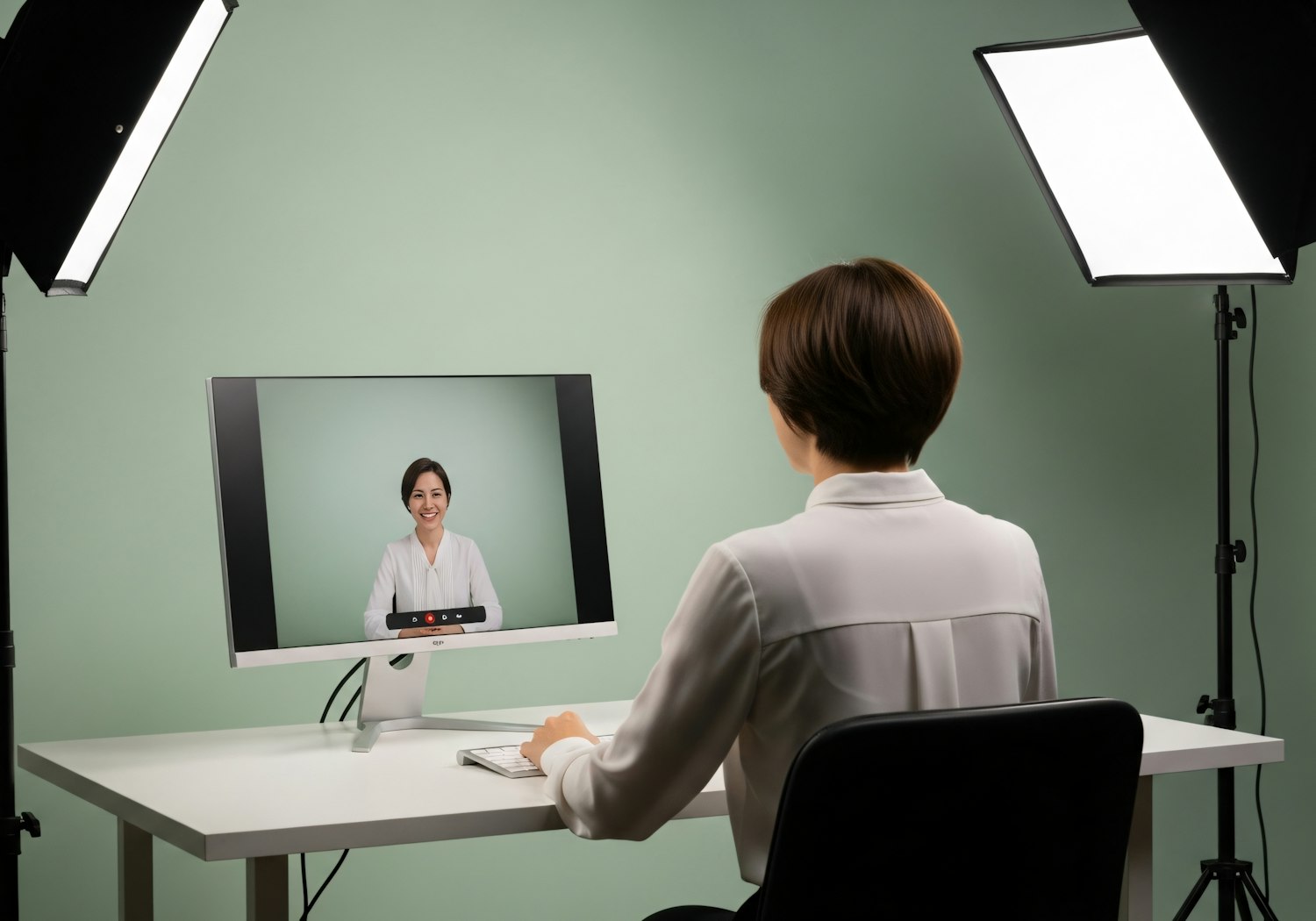
A clear video and sound show you are serious and prepared for a digital workplace [1].
-
Types of Questions: You’ll get questions about your nursing experience, like "Tell me about a time you helped a patient with a difficult problem" [2]. But for remote roles, they’ll also ask about how you handle things on your own. You might be asked to solve pretend clinical problems (case-based scenarios) or even act out a patient call to see how you communicate from afar [3].
-
Show Your Remote Superpowers: When answering questions, remember to talk about skills that are extra important for remote nurses. Think about:
- Good Communication: How do you make sure you understand patients and talk to your team without being in the same room?
- Time Management: How do you keep track of your tasks and stay organized when working from home?
- Tech Skills: Are you good with computers and different software programs, especially Electronic Medical Records (EMR) systems? This is a must for remote nursing [4].
Employers want to know you can work well on your own and use technology easily. You can find many common nursing interview questions and tips online to help you practice your answers for 2026 [5].
Starting Your Remote Role: Onboarding and Performance
After you get hired for one of those exciting remote nursing jobs, you’ll go through an onboarding process. This is when the company teaches you their specific ways of doing things. They will show you their computer systems, how to talk to patients, and how to work with your new team.
Once you start working, your employer will use different ways to see how you’re doing. These are called performance metrics. For example, they might look at:
- How many patient calls or encounters you handle in an hour.
- The quality of your care, meaning how well you help patients and if they are happy with your service.
- Your documentation standards, which means how clear and complete your notes are in the EMR system. Good notes are super important in remote care.
To do well, always try your best to follow the company’s rules, keep your notes clear, and use your communication skills. Staying organized and paying attention during onboarding will set you up for success in your new remote nursing career. Many high-paying part-time remote jobs, including nursing roles, require strong self-management, so focusing on these areas early can really pay off.
After getting hired for one of those exciting remote nursing jobs, you’ll dive into the day-to-day work. This means using special tools and smart ways to manage your time and tasks. Being a remote nurse in 2026 often means you’ll spend your time helping patients through different digital platforms.
Day-to-day workflow, tools, and productivity tips for remote nurses
Working in remote nursing jobs means you’ll be using a lot of technology. You’ll likely work with:
- Electronic Medical Records (EMRs): These systems are super important for keeping patient information organized and secure. You’ll document everything here, from patient symptoms to care plans. Strong tech skills, especially with EMRs, are a must for remote nursing [1].
- Telehealth Platforms: These are the main tools for talking to patients through video calls, regular phone calls, or secure messages. They help you do patient assessments and provide care without being in the same room [2].
- Remote Patient Monitoring Dashboards: Sometimes, you’ll look at data from devices patients wear at home. These dashboards show important health numbers like blood pressure or heart rate, helping you keep an eye on them from afar.
- Communication Tools: You’ll use apps like Slack or Zoom to talk with your team, supervisors, and other healthcare providers [2]. Good communication is key when you’re not in the same office.
To do well in your remote nursing job, you need to be good at managing your time and staying organized. Here are some tips:
- Plan Your Day: Set a clear schedule for when you’ll handle patient calls, do documentation, and take breaks. This helps you stay on track and manage your workload efficiently [3].
- Document Carefully: Always make sure your notes in the EMR are clear and complete. This is even more important in remote care to ensure everyone on the team has the right information.
- Set Boundaries: It’s easy for work and home life to mix when you work remotely. Try to have a specific workspace and stick to your work hours. This helps you focus during work and relax after hours. Many high-paying part-time remote jobs, including nursing roles, need strong self-management, so these skills are valuable.
Working from home also means thinking about your safety, privacy, and comfort.
- Keep Patient Information Private: Always make sure your computer screen isn’t visible to others in your home and that you’re in a private place when talking to patients. Protecting patient data is critical [2].
- Create an Ergonomic Workspace: Set up your desk and chair so they are comfortable and good for your body. This helps prevent aches and pains from sitting for long periods.
- Secure Your Technology: Use strong passwords and make sure your computer’s security software is up to date. This protects you and your patients’ information from online threats.
These tips will help you thrive in your remote nursing role, making sure you provide great care and stay productive. If you’re looking to explore more opportunities to earn well from home, consider reading about 9 high-paying part-time remote jobs to earn more from home.
Summary
This article is a practical guide for registered nurses who want to work from home in 2026, explaining what counts as remote nursing and why demand is growing. It walks through common roles—telehealth, case management, triage, remote patient monitoring, nurse educator and clinical advisor—and shows where these jobs fit in patient care. You’ll learn which employers hire remote nurses, how pay and benefits typically work, and realistic salary ranges for full-time and hourly roles. The guide covers the key transferable skills and certifications that make nurses competitive for remote roles, plus tips on getting started and finding entry-level or part-time RN positions. It explains licensing and telehealth rules, including the Nurse Licensure Compact and state-based requirements, and offers a checklist of documents employers will expect. The article also gives practical job-hunting advice—trusted job boards, search keywords, and red flags to avoid scams—along with interview, onboarding, and day-to-day workflow tips so you can succeed in a remote nursing role.