
How to Find Real Customer Service Jobs From Home in 2026 and Avoid Scams
· 18 min read

Introduction: The Promise and the Pitfalls of Remote Customer Service
Working from home as a customer service agent sounds like a dream. No commute. Flexible hours. A chance to help people right from your living room.

And it’s true: more companies than ever are hiring for customer service jobs from home in 2026. You can find part time customer service jobs work from home or land that full time at home customer service job. Even big names like Amazon offer amazon work from home customer service jobs.
But here’s the thing. With the boom in remote roles, scammers have flooded job boards with fake listings. According to a 2026 report from the Consumer Federation of America, online scams cost consumers billions every year. The Federal Trade Commission also filed complaints against a company called Legion Media for unauthorized billing during fake job offers. That means job seekers like you need a reliable framework to spot the real amazon part time jobs work from home or any legitimate opportunity.
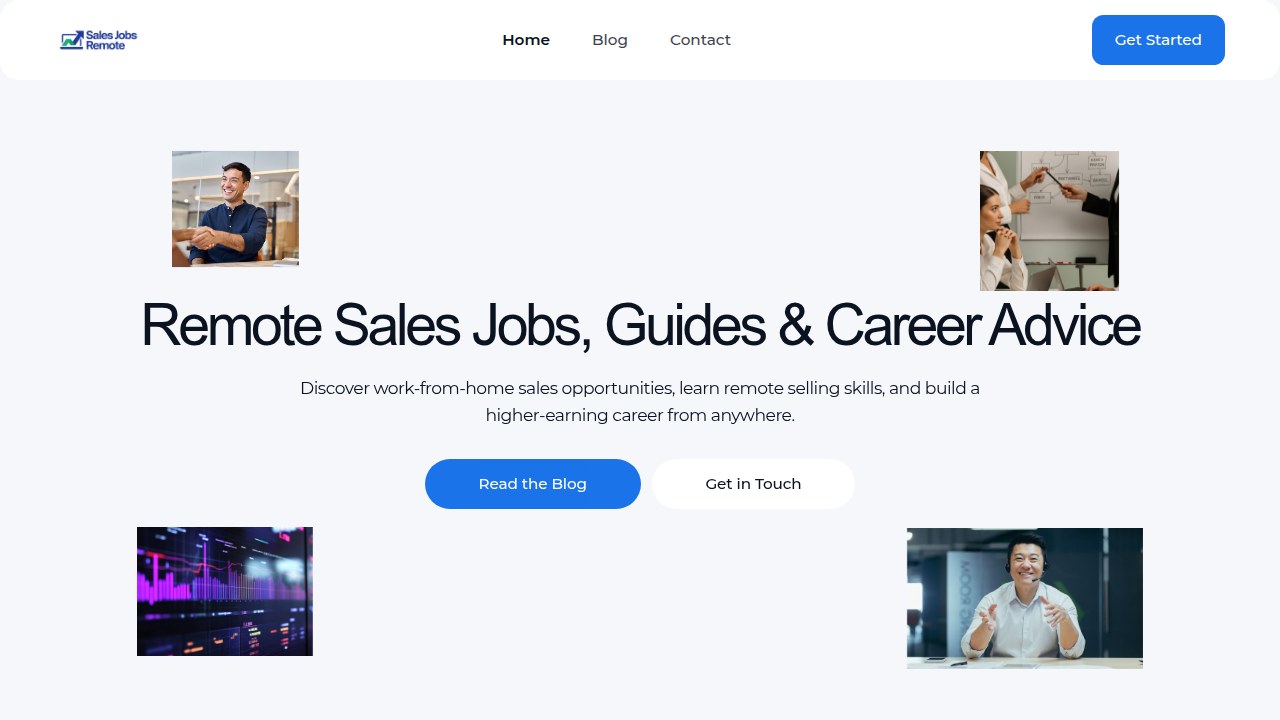
This guide will help you cut through the noise. We will show you how to identify genuine customer service jobs from home, build a sustainable career, and avoid traps. For more details on spotting scams, check out our step-by-step guide on finding legitimate remote sales jobs and avoiding scams.
Ready to start your search safely? View Resources for more proven strategies.
1. Understanding the Landscape of Remote Customer Service Jobs in 2026
The world of work has changed a lot in the last few years. And one of the biggest shifts is in customer service. More and more companies now hire people to help their customers from home. This is not a small trend. It is a lasting change.
According to the Bureau of Labor Statistics, about 22.6 percent of workers worked from home for pay in March 2026. That is a lot of people. And the numbers are going up. A report from the Job Board Doctor shows that remote job postings grew by 12.3 percent over the last year. So the demand for remote talent is real.
Now, what does a remote customer service job actually look like? It is not just one thing. You might work as an inbound call agent helping people with billing questions. Or you could be a chat support specialist answering questions on a website.

Some roles focus on email support for tech companies. Others are virtual assistants who help with multiple tasks. This variety is great because it means you can find a role that fits your skills and schedule.
The growth is happening in three main areas. Tech companies need support for their software and apps. Healthcare needs people to help patients schedule appointments and understand their benefits. And e-commerce needs agents to handle orders, returns, and shipping questions. AARP even projects that customer service roles in some fields will grow by 29 percent by 2034. So the opportunity is real.
But with so many options, it is easy to feel lost. You might wonder which roles are real and which are scams. That is why taking the time to understand the landscape is your first step.
If you are curious about how to find a specific type of remote job, check out our guide on how to land your Amazon work from home customer service job in 2026. It covers what to look for in a company and how to apply safely.
Ready to move forward? View Resources to see more articles that can help you on your journey.
2. How to Spot Legitimate Customer Service Jobs From Home
Here is the hard truth. Scammers know that people are looking for customer service jobs from home. And they use that hope against you. They post fake listings with high pay and very few details. It sounds too good to be true. And most of the time, it is.
According to a report from the Consumer Federation of America, online scams are a huge and growing problem. The Federal Trade Commission also tracks these threats closely and has filed complaints against companies running fake job schemes. You need to protect yourself.
So how do you tell the real opportunities from the traps? Start by watching for these red flags.
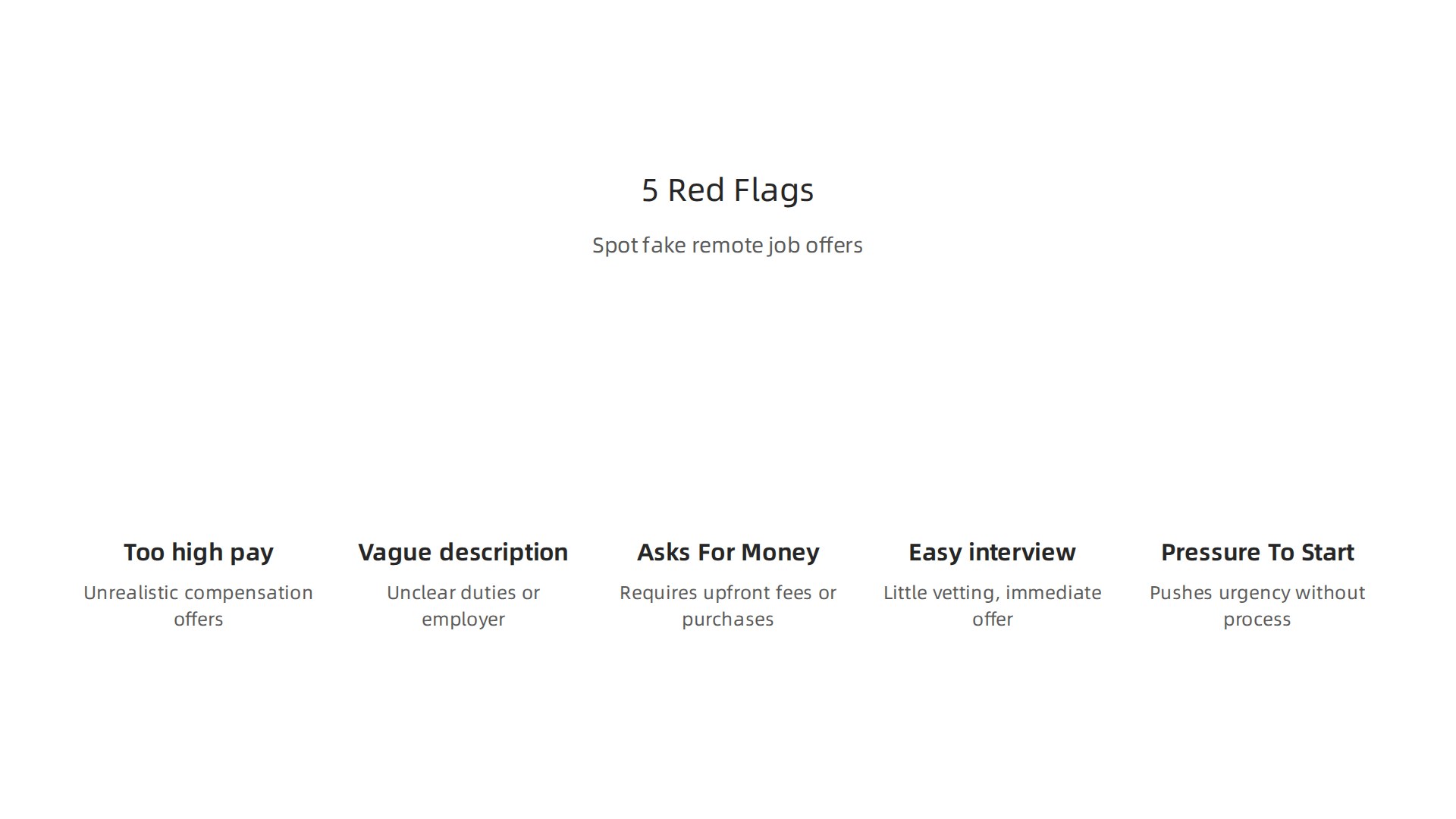
Red flag #1: The pay is way too high. A legitimate at home customer service job usually pays between $12 and $20 per hour for entry level. If a posting says you can make $40 an hour answering emails, walk away.
Red flag #2: The job description is vague. Scammers often copy and paste generic text. They do not name the actual company. They do not list specific duties. A real employer will tell you what software you will use, what hours you need to work, and what skills you need.
Red flag #3: They ask for money upfront. No real company will charge you for training, a background check, or equipment. If they ask you to pay for anything, it is a scam.
Red flag #4: The interview is too easy. Some scammers will "hire" you after a quick text chat. Real companies will interview you over video or phone. They will ask questions about your experience and your home office setup. You can even practice with resources like the interview questions guide we mention later.
Red flag #5: They pressure you to start immediately. Scammers want you to act fast so you do not think it through. Legitimate employers give you time to review the offer.
Now, where should you look instead? Stick to trusted job boards and company career pages. Avoid random ads on social media. Sites like Indeed, LinkedIn, and the company’s own website are safer bets.
Doing a little research can save you a lot of trouble. Check the company on Glassdoor. Look for reviews from current or past employees. Ask questions about equipment policies and training during the interview. And if something feels off, trust your gut.
If you want more tips on avoiding scams in different fields, our guide on how to find legitimate part-time front desk jobs and avoid scams covers similar warning signs you can use.
View Resources to see more articles that help you find real remote work and skip the waste of time.
3. Essential Skills for Remote Customer Service Success
Now you know how to tell a real job from a fake one. Good. The next step is making sure you have the skills that employers actually want in 2026. Let us break down what it takes to land and keep a customer service job from home.
The technical skills you need
Most remote customer service jobs require you to use special software. These are called CRM tools. They help companies keep track of every customer conversation in one place. According to Randstad USA, being good with CRM software is one of the top customer service skills in 2026. You may also need to learn chat platforms, email systems, and phone software. Do not worry. You do not need to be a tech wizard. You just need basic computer confidence and a willingness to learn. Most companies provide training on their specific tools.
The soft skills that matter more
Here is the truth. You can learn a new software in a week. But empathy, patience, and clear communication take longer to build.
One complete guide on customer service skills lists communication, empathy, and problem solving as the top traits employers look for. Another source from Text.com explains that emotional intelligence is just as important as technical ability, especially in the AI era.
When a customer is upset, they want to feel heard. You have to stay calm, listen carefully, and find a solution. That is a skill you can practice every day.
Self-discipline is non-negotiable
Working from home means no one is watching over your shoulder. You set your own schedule. You manage your own focus. An article on thinking skills for remote jobs highlights that analytical thinking and critical thinking are essential when you work alone. You have to solve problems on your own without running to a manager for every small issue.
Set up a dedicated workspace. Keep regular hours. Take breaks when you need them. These simple habits make a big difference.
Do certifications help?
Yes. Many employers in 2026 prefer candidates who have completed remote work training or customer service certifications. Certifications show that you are serious and ready to start. They also teach you the specific workflows that companies use.
If you want to see what a real customer service job from home looks like at a major company, check out our guide on landing an Amazon work from home customer service job. It covers the exact skills and steps that top companies look for in candidates.
View Resources for more articles that help you build your remote career step by step.
4. Decoding Compensation: Hourly Wages, Base Pay, and Incentives
You have the skills. Now let us talk about the money. Pay for customer service jobs from home can look very different depending on the company, your experience, and the industry you choose. The key is to understand the full picture before you say yes to an offer.
What does the average pay look like?
In 2026, the average hourly pay for a Customer Service Representative is about $18.04, according to PayScale. But that number can swing. Work at home customer service roles range from $12 to $22 per hour, with extra pay possible through bonuses and commissions. On the yearly side, Glassdoor reports the average salary for remote customer service is around $47,688. If you live in a higher cost area like New York City, that average jumps closer to $54,000.
So why the wide range? Here are the big factors:
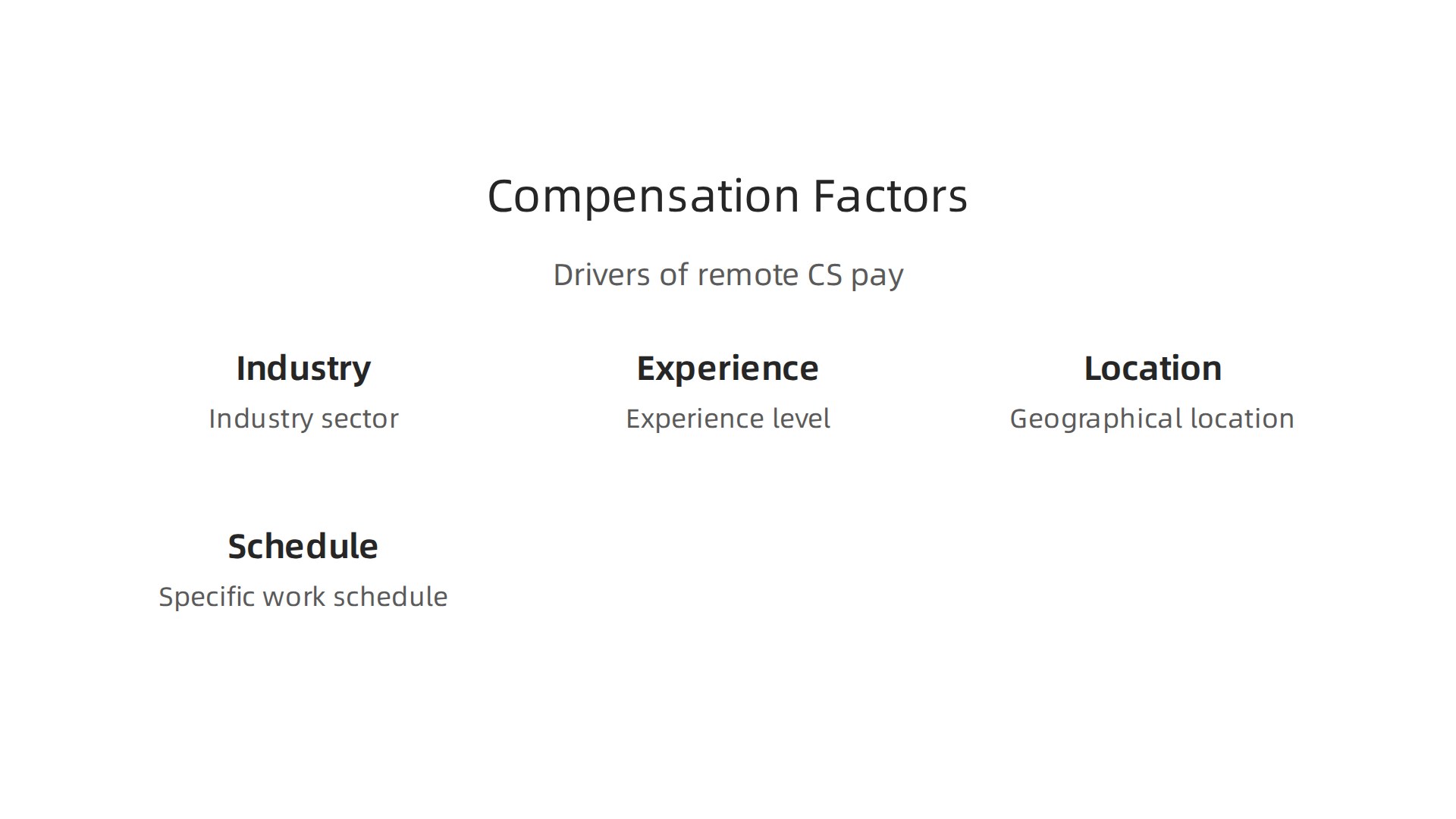
- Industry: Tech and finance companies often pay more than retail or hospitality.
- Experience: Entry level roles start lower. A few years on the job can bump your rate.
- Location: Some companies adjust pay based on where you live. Others offer a flat national rate.
- Schedule: Evening, night, or weekend shifts often come with a shift differential, meaning extra money per hour.
Base pay is only part of the story
Many at home customer service jobs offer more than just an hourly wage. You might see:
- Performance bonuses: Earn extra for hitting customer satisfaction or sales goals.
- Shift differentials: Get paid more for working less popular hours.
- Commissions: If the role involves upselling or sales, commission can add thousands to your income.
- Benefits: Health insurance, paid time off, and retirement plans add real value. Do not ignore them when comparing offers.
For example, a part time customer service job work from home that pays $16 an hour with no benefits might actually be less valuable than one paying $14 an hour with full health coverage and a 401k match. Look at the total package.
How to compare offers like a pro
When you get a job offer, write down the base hourly rate, any guaranteed bonuses, shift differentials, and the value of benefits. Then compare apples to apples. If you want to see real examples of pay for specific roles, check out our guide on 9 high paying part time remote jobs. It breaks down pay ranges for several popular remote roles so you know what is fair.
Understanding compensation takes a little work, but it is worth it. You do not want to accept a customer service job from home only to realize later that another company would have paid you $5 more per hour. Do your research. Know your worth.
View Resources for more tips on comparing job offers and negotiating your pay.
5. Acing the Virtual Interview for Customer Service Roles
You have your resume ready and a few good leads. Now comes the part that makes most people nervous: the interview. For customer service jobs from home, the interview happens over video. That changes a few things.
Think of a virtual interview like a test run for the actual job. The company wants to see if you can handle the technology and the environment. They also want to know how you think on your feet.
Set yourself up for success
Before the interview starts, take care of the basics. Your setup says a lot about you.

Make sure you have:
- A stable internet connection so your video does not freeze
- Good lighting on your face, not behind you
- A quiet, distraction-free room
- A neutral background or a simple virtual background
- Your camera at eye level
When companies ask, "How do you ensure your home office is a good working environment?" they want to hear that you have already thought about these things. One hiring guide points out that this question is common in remote customer service interviews. Show them you are ready.
Prepare for common behavioral questions
In remote customer service interviews, you will almost always get questions about handling difficult customers and multitasking under pressure. According to a 2026 guide on interviewing for remote customer service roles, you should expect questions like "How do you handle difficult customers?" and "Can you describe a time you solved a problem quickly?".
Practice your answers using the STAR method: Situation, Task, Action, Result. Keep your stories clear and short. For example, "A customer was upset about a late delivery. I listened, apologized, and tracked the package. I offered a discount, and they left happy."
Show you are built for remote work
Companies hiring for at home customer service jobs want people who can work without direct supervision. In your interview, highlight your self-motivation and tech skills. Mention times you managed your own schedule or solved a problem without asking for help.
If you are applying for something like Amazon work from home customer service jobs, be ready to talk about your ability to learn new systems quickly. Check out this guide on how to land your amazon work from home customer service job for more specific tips.
One more thing: practice with a friend. Do a mock video call so you get used to talking to a screen instead of a person. It feels weird at first, but it gets easier.
Your goal is to walk away from the interview feeling like you showed them you can handle the job from your living room. That confidence makes all the difference.
View Resources for more interview tips and example answers to common questions.
6. Building a Career Path in Remote Customer Service
You landed one of those customer service jobs from home. That is a great start. But what comes next? Does this role have a future?
The short answer is yes. Remote customer service is not a dead end. It is a launchpad.
Your first role is just the beginning
Most people start in entry-level support. You handle chats, emails, or calls all day. Once you prove you can handle the work and treat customers well, new doors open.
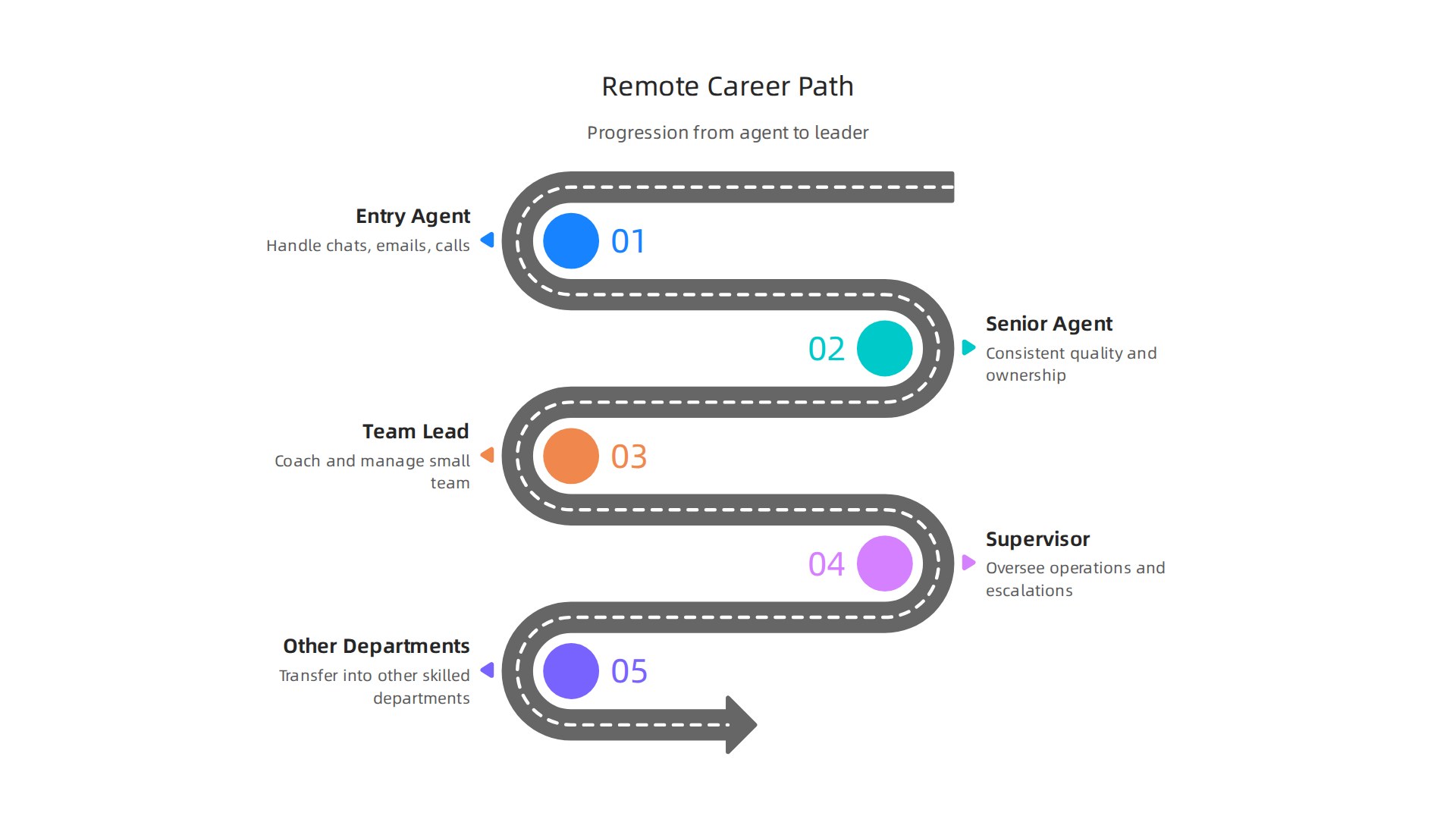
You might move into a team lead role where you help newer agents learn the ropes. Or you could shift into quality assurance, where you review calls and coach others. Some agents become supervisors or managers within their first two years. The 2026 career guide from TTEC explains how agents can take their role to the next level with clear promotion strategies and skill building. Many companies prefer to promote from within rather than hire outsiders.
Your skills are valuable everywhere
Here is something cool. The skills you build in an at home customer service job are like gold in other departments. You learn patience, clear communication, and how to solve problems fast. These are exactly the skills needed in remote sales and account management. A guide on essential customer service skills from Ringover breaks down why these competencies are valuable across whole companies. If you ever want to switch gears, your customer service background gives you a huge head start over outsiders.
Keep learning to move up faster
If you want to advance quickly, keep building your skills. Companies love when agents take the initiative to learn more. Short certifications in customer service, CRM software, or conflict resolution can make your resume shine. According to Text.com, continuous training is key to building the exact skills teams need in 2026. Spending a little time learning on the side can lead to better roles and higher pay down the road. Even a few hours a month makes a difference.
Your first customer service jobs from home does not have to be your last. It can be the first step in a long, flexible remote career.
View Resources for more guides on career paths and how to keep growing in your remote job.
7. Networking and Mentorship in a Remote Customer Service Environment
Here is the honest truth. Building professional relationships is a lot harder when you work from home. You do not bump into colleagues by the water cooler. You cannot grab coffee with a mentor after a meeting. But making those connections is still one of the most important things you can do for your career.
Why does it matter so much? Because people hire people they trust. A strong network can bring you job leads before they ever hit a job board. It can give you advice when you feel stuck. And a good mentor can show you shortcuts you would never find on your own.
Where to start building your network
You do not need to leave your house. The internet is full of places where remote customer service professionals gather. LinkedIn groups focused on customer support or remote work are great places to start. Join conversations. Share what you learn. Ask questions. You can also find active communities on Slack, Discord, and even Facebook.
Virtual industry events are another goldmine. Many companies host free webinars and conferences. Attending these events lets you meet people who work in the same field. The 2026 guide to remote customer service jobs from Coursera mentions that connecting with others in virtual settings can help you learn about new trends and find opportunities you would not see otherwise.
Finding a mentor who can help you grow
A mentor is someone who has been where you want to go. They can give you insider knowledge about promotions, skills to develop, and even how to handle tough customers. How do you find one? Start by looking at people a few steps ahead of you in your own company or in online groups. Send a short message explaining what you admire about their work and ask if they would be open to a 15-minute chat. Most people are happy to help.
Mentorship works especially well in remote environments because you can meet over video call. You do not have to be in the same city. This means you can learn from the best people in your field, no matter where they live.
Your network is your safety net
Whether you work in an at home customer service job or a part time customer service jobs work from home role, your network protects you. If your current job ends, your connections are the first people who will tell you about new openings. If you want to move into a different department, someone in your network can put in a good word.
As more companies embrace telework (a 2026 BLS report shows 22.6% of workers now work from home), the competition for good roles gets stronger. Having a mentor and a network gives you a real edge. It makes the difference between sending out blind applications and getting warm introductions.
Take the next step
Start small. Join one LinkedIn group this week. Follow up with one person after a virtual event. Reach out to one senior colleague for a short chat. Every connection you make today could lead to your next big opportunity tomorrow.
For more ways to grow your remote career, View Resources and explore articles that help you keep moving forward.
Summary
This guide explains how to find and succeed in legitimate customer service jobs from home in 2026, while avoiding the many scams that now target remote job seekers. It outlines the current market, common role types across tech, healthcare, and e-commerce, and clear red flags—like vague listings, upfront fees, and unrealistically high pay—that signal fraud. The article breaks down the technical and soft skills employers want, gives practical advice for virtual interviews and home-office setup, and explains how to evaluate total compensation including bonuses and benefits. It also covers career progression opportunities and tactics for building a remote network and mentorship. After reading, you’ll know where to look safely, how to vet offers, how to present yourself in interviews, and how to plan a long-term remote customer service career.